Federal Proposal Prohibits Healthcare Discrimination Based on a Person’s Disability
By: McKenzie Richmond, KTUL Staff
Published: April 18th, 2024 at 2:24pm
TULSA, Okla. (KTUL) — A proposed amendment to Section 504 of the 1973 Rehabilitation Act aims to help eliminate healthcare discrimination for those living with intellectual and developmental disabilities (IDD).
The amendment will prohibit discrimination based on a person’s disability.
The language will clarify obligations that our health systems must meet to achieve equitable healthcare for patients.
Right now, medical experts say a lack of IDD training and inherent bias continue to lead to significant health disparities for people with disabilities.
“There is evidence to show they have lower rates of preventive health screenings,” Dr. Craig Escudé, family physician and president of IntellectAbility, said. “People with intellectual disabilities have a 2.5 times increase in risk of dying from cancer. We know that people with IDD die at a younger age than people without intellectual and developmental disabilities and the thing is it’s not usually attributed to the fact they have IDD itself.”
A vital step to improve healthcare outcomes for people with IDD is increasing training.
“We know medical schools, nursing schools, most health care professional skills are lacking in training clinicians to meet the healthcare needs of people with intellectual and developmental disabilities,” Escudé said. “That leads to biases. That leads to assumptions that are made that people with IDD have a lower quality of life. That leads to health disparities and deprioritization.”
“I learned very quickly how ill-prepared I was to treat patients with IDD,” Escudé said.
The proposed rule highlights the need for more training, emphasizing the importance for clinicians to learn the different ways patients with IDD may communicate their symptoms, so healthcare workers can make more accurate clinical diagnoses and provide better treatment.
“They may not be able to say, ‘My tooth is hurting, I need to go to the dentist’,” Escudé said. “What they may do is hit themselves in the face because it hurts right there or hit their head on the wall.”
Beyond education, the rule change calls for accessible medical equipment.
“If a person can’t have access to cancer screening, like a mammogram, because they don’t have equipment that they can appropriately utilize then you’re going to misdiagnose. It will lead to delayed diagnosis and treatments.”
If signed into law, this amendment would improve healthcare equity for the 42 million Americans living with IDD.
In Oklahoma alone, more than 600 thousand Oklahomans report living with one or more disabilities, meaning this amendment would impact more than 16% of the population.
New Study Finds Significantly Worse Cancer Survival Rates for People with Intellectual and Developmental Disabilities
Clearwater, April 8, 2024
By Daniel Mutter
Researchers conclude that improvements in physician training are an essential step to lowering mortality rates for disabled cancer patients.
A new study published in the Canadian Journal of Public Health found people with intellectual and developmental disabilities (IDD) suffered higher instances of death after being diagnosed with breast, colorectal, or lung cancer.
According to Breast (female), Colorectal, and Lung Cancer Survival in People with Intellectual or Developmental Disabilities: A Population-Based Retrospective Cohort Study, published February 5, 2024, patients with IDD were 2.74 times more likely to die from breast cancer, 2.42 times more likely to die from colorectal cancer, and 1.49 times more likely to die from lung cancer. (1)
Researchers examined data from nearly 340,000 adults diagnosed from 2007 to 2019 in Ontario, Canada. Patients were followed from their date of index cancer diagnosis until they died or by December 31, 2021, whichever came first. With few exceptions, worse survival for people with IDD persisted regardless of stage at diagnosis. Five-year survival for patients with IDD vs. no IDD was 61.5% vs. 81.7% for those with breast cancer, 34.2% vs. 56.6% for colorectal cancer, and 11.9% vs. 19.7% for lung cancer. (2)
The study points to several causes for poorer health outcomes for cancer patients with IDD. According to study author Dr. Alyson Mahar, implicit and explicit biases and ableism within medicine and nursing often contribute to inequitable health outcomes.
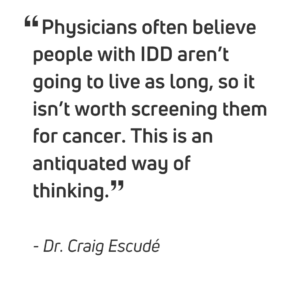
“Physicians often believe people with IDD aren’t going to live as long, so it isn’t worth screening them for cancer. This is an antiquated way of thinking,” says Dr. Craig Escudé, President of IntellectAbility. “Studies have shown that healthcare workers are often under the impression that people with IDD have a lower quality of life. But it’s important to recognize that just because somebody’s life is different doesn’t mean it’s of a lower quality. We must value all people and invest time and energy to help them live fuller and healthier lives.”
According to the study, misconceptions about quality of life and gaps in physician knowledge are directly linked to a lack of training in how to care for people with IDD properly. It can often be challenging for healthcare workers to diagnose cancer in patients who don’t use words to communicate how they are feeling. Limitations in recognizing early signs of health destabilization in any population sub-group can lead to delayed or improper diagnoses and, in turn, poorer health outcomes.
“It’s so important that we train clinicians to be able to look for other signs of early health destabilization. If we can catch these things earlier by increasing screenings and being more attuned to the different ways that a person might present with signs or symptoms of an illness, we’re much more likely to produce better health outcomes,” says Escudé.
IntellectAbility’s eLearn course, The Curriculum in IDD Healthcare (CIDDH), aims to address gaps in the delivery of medical care to people with IDD. A newly published study in the peer-reviewed journal Knowledge found that trainees deemed CIDDH very effective. By addressing the unique needs of individuals with IDD, healthcare training programs like CIDDH can reduce health disparities and improve the quality of life among patients with IDD. (3)
“The Curriculum in IDD Healthcare teaches clinicians how health conditions appear differently in people with IDD, how their communication styles might be different, and how adverse behaviors might be an early sign of health destabilization, including for diseases like cancer,” says Escudé. “It’s important and valuable for healthcare workers to investigate those early signs and symptoms, just like they would for anyone else, to be able to make more accurate diagnoses, pick up on things earlier, and improve health outcomes.”
Wellpoint Texas and IntellectAbility Address Health Equity for Texans with Intellectual Disabilities (IDD)
Clearwater, March 25, 2024
By Daniel Mutter
With an investment from Wellpoint Texas in partnership with the Health Equity Through Clinician Education on IDD Initiative, Texas physicians and other clinicians will now have free access
to an online, continuing medical education-approved course called the Curriculum in IDD Healthcare, authored by Dr. Craig Escudé, a board-certified developmental medicine physician and president of IntellectAbility.
Wellpoint Texas helps improve healthcare access and quality for nearly 750,000 Texans who participate in the state’s Medicaid programs. For nearly 30 years, Wellpoint has been working with
doctors, specialists, and hospitals throughout Texas and partnering with many local community organizations, to help Texas families access the care they need. Wellpoint’s dedication to health equity is why the organization chose to invest $60,000 to make this training free and easily accessible.
According to a recent survey from Harvard Medical School[i], more than 80% of surveyed physicians perceived people with significant disabilities to have a poorer quality of life than non-disabled people and only 40% of physicians rated themselves as feeling “very confident” about their ability to provide the same level of healthcare to their patients with disabilities.
“Physicians and other clinicians want to embrace and support people with disabilities, but most have not received education in disability-competent healthcare,” said Dr. Escudé. “This results in a culture of fear and uncertainty that leaves people with IDD at the mercy of a healthcare system that doesn’t understand their needs.”
Wellpoint’s suite of health benefits is designed for consumers at any stage of life, offering access to simple, supportive health solutions to help foster whole-person health, including services from in-home wellness visits and transportation to the deployment of mobile medical clinics in low-income and rural communities.
“We value the health and well-being of all Texans and recognize the importance of collaborating and sharing best practices when it comes to providing the best possible healthcare for people with IDD,” said Greg Thompson, president of Wellpoint. “By making this online curriculum available free of charge to all Texas physicians and clinicians, we believe we can significantly impact health equity and improve the health and well-being of Texans living with IDD.”
The new partnership will build a greater understanding of the health risks and comorbidities of Texans with IDD while also ensuring better health outcomes and improvements in quality of life.
“This is a “win-win” for Texas physicians and other clinicians,” said Dr. Escudé. “At the same time you are increasing your disability healthcare competence, you can earn contact hours toward your license renewal.”
About Wellpoint Wellpoint, part of the Elevance Health family of brands, focuses on improving physical health and the behavioral and social drivers that impact it through a comprehensive suite of Medicare, Medicaid, and Commercial products. The Wellpoint companies offer healthcare services for consumers at any stage of life seeking to make the right care decisions and help individuals and communities make real, positive progress with health plans that foster independence, confidence, and whole-person health. For more information, please visit www.wellpoint.com.
[i] Physicians’ Perceptions Of People With Disability And Their Health Care. 2021. Lisa I. Iezzoni, Sowmya R. Rao, Julie Ressalam, Dragana Bolcic-Jankovic, Nicole D. Agaronnik, Karen Donelan, Tara Lagu, and Eric G. Campbell. Health Affairs, VOL. 40, NO. 2. https://www.healthaffairs.org/doi/10.1377/hlthaff.2020.01452
Author Daniel Mutter can be reached at Daniel (at) mutterworks.com
Developmental Disabilities Awareness Month Emphasizes the Importance of Education to Remove Obstacles for Disabled Americans
Clearwater, March 11, 2024
By Daniel Mutter
The theme of March’s Developmental Disabilities Awareness Month is “A World of Opportunities,” which is about celebrating people and working together to remove obstacles. One such obstacle includes equitable healthcare access, which continues to lead to poor health outcomes for Americans with developmental disabilities.
In 1987, President Reagan recognized March as Developmental Disabilities Awareness Month to increase “public awareness of the needs and the potential of Americans with developmental disabilities” and to provide the “encouragement and opportunities they need to lead productive lives and to achieve their full potential.” (1)
Over 35 years later, great strides have been made to increase access and create opportunities for people with developmental disabilities. Yet, when it comes to health and wellness, managed care and healthcare organizations continue to struggle with providing adequate care for disabled persons.
According to a study published in Health Affairs, titled Advancing Health Equity and Reducing Health Disparities for People with Disabilities in the United States, people with disabilities are more likely to report poor health and experience higher rates of chronic health conditions than non-disabled people. Disabled adults were more likely to experience chronic conditions such as cardiac disease, diabetes, higher weight, asthma, and lack of emotional support. (2)
“If you aren’t healthy, if you’re suffering from undiagnosed conditions, then you’re not going to be able to participate as fully in life and be fully included in society because you’ll be in pain, or the hospital, or worse, you could die prematurely,” says Dr. Craig Escudé, President of IntellectAbility. “One of the biggest things we can do to remove obstacles for people with disabilities is to improve access to capable and competent healthcare.”
Healthcare workers are offered little to no training in how to properly care for patients with intellectual and developmental disabilities (IDD). As a result, healthcare workers operate under the assumption that people with developmental disabilities don’t have the same quality of life as people without disabilities. When healthcare workers believe their patients do not have a good quality of life, they’re far less likely to provide the support and services needed to improve overall health.
IntellectAbility provides tools and training to aid managed care organizations, healthcare workers, direct support professionals, and case managers in recognizing the unique presentations of common medical conditions that can lead to death, including aspiration, constipation, bowel obstruction, seizures, dehydration, and sepsis.
“Improvements in training can help clinicians recognize common health conditions earlier, empowering them to make the right diagnosis and ensuring they create a proper care plan for patients with disabilities,” says Escudé. “Education is the key to reducing health risk and allowing people with IDD to live fuller lives and become valuable members of their communities.”
IntellectAbility provides tools and training to agencies, governmental entities, and supporters of people with intellectual and developmental disabilities to foster early recognition and mitigation of health risks, thereby improving health and wellness. One such tool is the Health Risk Screening Tool (HRST), of which they are the sole developer, producer, and distributor. The web-based HRST is the most widely used and validated health risk screening instrument for people with intellectual and developmental disabilities.
IntellectAbility also provides numerous health-related and person-centered service training for supporters of people with IDD. With an unrelenting focus, IntellectAbility aims to improve health and quality of life for people with intellectual and developmental disabilities and other at-risk populations. For more information, visit www.ReplacingRisk.com
A new proposed rule by the U.S. Department of Health and Human Services (HHS) is intended to battle healthcare discrimination for disabled Americans. This update in focus has highlighted the need for improvements in training to enable better outcomes for individuals with intellectual and developmental disabilities.
The proposed rule, which comes from the HHS Office of Civil Rights (OCR), would prohibit discrimination based on disability—and while the implications of this rule should ensure better outcomes for the over 42 million Americans with disabilities, the industry must still content with inherent biases which can often lead to health disparities for people with disabilities.
The OCR’s proposed rule looks at enhancing medical and technological accessibility, as well as prohibiting the use of value assessment methods to place a lower value on life extension for individuals with disabilities to ensure that medical treatments are not based on stereotypes about these individuals.
A lack of training for proper care for patients with disabilities can often lead to incorrect assumptions about quality of life and decisions about preventive care measures. Certain screenings are performed at a lower rate for patients with disabilities for these reasons, including prostate, breast cancer, oral health, cholesterol, and colon screenings.
How can organizations prepare for this potential rule shift, and where can they identify gaps in training and education to improve care for patients with disabilities?
“What this rule is looking to do is beef up and in many ways modernize some of the things that were in the Americans with Disabilities Act (ADA) of 1973,” says Dr. Craig Escudé, president of IntellectAbility, an organization that provides tools and training for agencies, government entities, and supporters of people with intellectual and developmental disabilities to improve care. “We know people with disabilities face significant health disparities and overall poorer outcomes.”
“Lower rates of preventive screenings are just one of these barriers to care,” Escudé says.
“It’s harder for these patients to access care from clinicians who really understand their needs, especially when it comes to intellectual and developmental disabilities,” he says. “As a physician myself, I was not trained on how to provide healthcare for people with intellectual and developmental disabilities, and that’s still very prevalent. Clinicians must understand and be trained on how to provide good care for these patients.”
Even today, physical access can be a challenge for patients with disabilities. Being able to get into the doctor’s office, or basic diagnostic steps like weighing a patient with mobility issues or helping them onto an exam table can be overlooked until you’re in the moment, and this is where additional training and insight is so necessary.
“One of the things the pandemic brought to everyone’s attention was the many health disparities for people with disabilities, intellectual and developmental in particular. We saw people who were deprioritized from life-saving measures based solely on the fact they have a disability,” says Escudé. “People saw them as having a lower quality of life because of their disability and that goes against the ADA. It’s something those of us who have worked in this field have always seen, but because this crisis happened on a national level it really brought it to the attention of the larger public in a way we haven’t seen before.”
Where to Focus Improvements
Escudé notes that when looking for areas to improve, the industry should look at ways to improve health equity for patients with intellectual and developmental disabilities in general.
“Better education for providers of all types—there are studies that show that a very low percentage of medical schools really have a formal curriculum about caring for people with disabilities,” he says.
Providers appear to be aware of where this lack of comfort in their practice exists: a study from HealthAffairs found that only 41% of physicians were “very confident” about their ability to provide the same quality of care for patients with disability, 56% strongly agreed that they welcomed patients with disabilities into their practices, and 18% strongly agreed that the healthcare system often treats these patients unfairly.
“These studies show that the majority of clinicians feel they are unable to deliver the same level of healthcare to people with disabilities to those without, and when you have these types of mindsets in healthcare it’s very easy to see why we have disparities,” Escudé says. “Training is the most important thing to do. I practice family medicine—if you came to me for cataract surgery, you’d go blind. I’m not trained for cataract surgery! It’s not a matter of not having a desire to learn, but a need to do a better job of training clinicians to provide care to millions of people in this world with disabilities.”
Training requires a two-pronged approach: addressing both those currently in practice and those who are in training now.
“If we only start by implementing training in medical schools, we’re looking at years and years before we have a large number of clinicians who are competent to meet these needs,” says Escudé. “We also need to look at how we train clinicians out in practice now, to be able to get them the skills to provide fundamental care for these populations.”
It isn’t limited to just physicians, Escudé notes. Nurses, physical therapists, nurse practitioners, physician’s assistants, and support staff can all learn from these fundamental principles. Still, urging medical professionals of all types to expand their education in this area is pivotal.
“Clinicians don’t know what they don’t know, and they don’t know they need to learn this information—and may not recognize that this type of training will enhance their clinical skillsets in other areas of medicine including caring for people with cognitive changes such as dementia, people who are aging, and those with a traumatic brain injury. Any of us can become disabled, temporarily or permanently,” says Escudé. “Learning how to provide good healthcare for people with intellectual disabilities will enhance care for all.”
Escudé points to several organizations doing excellent work in this area: the American Academy of Developmental Medicine and Dentistry, a group of physicians and dentists working together to improve healthcare education; the Developmental Disability Nurses Association, which trains and certifies nurses in this area; and a newer organization called the Institute of Exceptional Care, which recently developed a roadmap of steps clinicians can take to build skills and confidence when working with this patient group.
“I’ve been practicing in this field for 25 years, and when I first started out, I couldn’t find information about how to provide care for people with disabilities,” he says. “I learned through people who were working in a facility that worked with patients with intellectual or developmental disabilities, and that was how knowledge was transferred.”
It’s been refreshing to see an uptick in interest, understanding, and even funding for this kind of education for healthcare professionals in recent years, he says.
The Impact of Diagnostic Overshadowing
In particular, discussion about diagnostic overshadowing is something professionals can and should address when treating this patient population, Escudé highlights.
“It’s very common, where a clinician will say that a particular set of symptoms a person might exhibit are related to that person’s overall diagnosis, rather than looking at a treatable underlying cause,” he says. “A person who does not use words to communicate might be showing aggressive behavior towards others or are hitting themselves. So often, to an untrained clinician, that looks like something that ‘just happens’ with people with intellectual or developmental disabilities, so they put them on psychotropic medication to control that behavior.”
Meanwhile, that patient is in fact experiencing pain. It might be from a dental abscess, gall stones, any number of sources of pain that are not immediately obvious.
“Nobody bothers to look, and that condition gets worse and worse, so the person ends up in the hospital or even dies from it,” says Escudé.
“The Joint Commission felt this was important enough to warn people and health systems about and raise awareness about what they can do to prevent it,” says Escudé. “Even with that, many doctors who understand the concept may still lack the skillset to properly evaluate these patients.”
With more focus on closing the disparity gap for patients with intellectual or developmental disabilities—and other disabilities as well—the industry has a chance to create better outcomes for all patients.
“My gold standard is that any person with or without a disability can present themselves to any doctor’s office or hospital system and be guaranteed they will receive a basic level of competent and compassionate healthcare,” says Escudé. “That’s where we need to be and what we’re working toward: true health equity, including for people with disabilities.”
Matt Phillion is a freelance writer covering healthcare, cybersecurity, and more. He can be reached at matthew.phillion (at) gmail.com.
Increasing Caregiver Shortages Lead to Dwindling Health Outcomes for Disabled
Clearwater, January 16, 2024
By Daniel Mutter
A major healthcare crisis is on the rise nationwide as direct support professionals (DSPs) continue to quit in droves, leading to increasingly poor health outcomes for Americans living with intellectual and developmental disabilities (IDD). While low wages are slow to catch up with the times, education and support are helping bridge the gap, decreasing turnover and improving the level of care for disabled Americans.
The American Network of Community Options and Resources (ANCOR) recently published the results of its 2023 State of America’s Direct Support Workforce Crisis survey, which polled 581 healthcare organizations operating across 45 states nationwide. The study measured the impact of the DSP workforce crisis on community-based providers supporting people with IDD.
According to this survey, 95% reported experiencing “moderate” or “severe” staffing shortages in the past year. As a result, more than three-quarters (77%) of those surveyed reported turning away new referrals in 2023 due to ongoing staffing shortages and 44% indicated they had to completely discontinue programs or service offerings due to insufficient staffing.(1)
As a result of this study, one of the major recommendations made by ANCOR is for care organizations to invest in career pipeline programs to enhance training and professionalization in the field.
“Providing better training for caregivers allows them to feel more capable and confident in their work, which means they are far more likely to stay with their job, leading to less staff turnover,” says Dr. Craig Escudé, President of IntellectAbility. “When you can train direct support professionals to know what to expect and what to look for, you can have a positive impact on people’s lives while improving health outcomes for those they support.”
IntellectAbility provides tools and training to agencies, governmental entities, and supporters of people with IDD to foster early recognition and mitigation of health risks, including the “Fatal Five,” or the top conditions linked to preventable deaths of people with IDD, including aspiration, constipation/bowel obstruction, seizures, dehydration, and sepsis. A recent partnership with Elevance Health will mean thousands more will benefit from these life-saving educational programs.
In addition to providing enhanced training courses, IntellectAbility has also developed the Health Risk Screening Tool (HRST) to assist DSPs in recognizing the early warning signs of health destabilization for people with IDD. Currently, 26 states and over 2,000 private provider agencies utilize the HRST.
“One of the keys to recognizing health destabilization is getting to know patients long-term. However, high staff turnover can make it increasingly difficult for caregivers to notice these warning signs. The HRST helps newly hired supporters pick up where their predecessors left off, empowering them to easily identify, track, and create actionable healthcare plans to improve health outcomes and save lives.”
Diagnostic overshadowing is a significant problem for people with intellectual/developmental disabilities (IDD). Individuals may exhibit so-called “behaviors” indicating an undiagnosed medical or dental condition—that are easily overlooked or misinterpreted by clinicians.
People with IDD are susceptible to the same age-related issues as anyone else. IntellectAbility President Dr. Craig Escudé explains how to help them maintain a good quality of life and why supporters must be trained to recognize signs of aging among this population group.
Studies show that universities are becoming more progressive with the opportunities they offer to people with intellectual and developmental disabilities (IDD).
People with IDD Face Systemic Barriers; NCD Calls to End Inequity, Increase Medical Training
Published on WPGX Fox28
A recent paper from the National Council on Disability highlighted the physical and systemic barriers that exist in healthcare access for people with intellectual and developmental disabilities (IDD), particularly the need for better medical school curricula. Dr. Craig Escudé, President of IntellectAbility, is a longtime advocate of better training for healthcare providers treating individuals with IDD and offers his unique perspective on how we can move towards addressing these inequities nationwide.
The lack of training for healthcare providers specifically related to treating people with intellectual and developmental disabilities (IDD) has been a matter of discussion for many years. Healthcare workers attending to people with IDD-from the supporter to the clinician-inadvertently have put this population at risk because they lack the necessary training to fully meet their healthcare needs. “Advocates and some physicians have maintained that this compromised ability of the healthcare community to meet the needs of people with IDD is a form of discrimination” says Dr. Craig Escudé, physician and president of IntellectAbility.
According to the American Academy of Developmental Medicine and Dentistry (AADMD), the average life expectancy of people with IDD is more than 60 years now, as compared to years ago when their average life expectancy was less than 20 years.(1) Physicians like Escudé have pointed out how the healthcare community is not always aligning their objectives with these changes. “With people with IDD living longer, it is even more vital that they receive appropriate healthcare services, including preventive care, to ensure the best quality of life,” says Escudé.
“Even as a former physician leader at the Centers for Medicare and Medicaid Services, and a parent of a son with a developmental disability, I had limited understanding of the healthcare needs of people with disabilities until our family experienced the negative impacts of poorly trained clinicians,” says Dr. Mai Pham, from the Institute of Exceptional Care, a prominent organization working to improve healthcare for people with IDD who contributed to a National Council on Disability paper entitled Health Equity Framework for People with Disabilities. “There is desperate need to support healthcare practitioners in overcoming outdated assumptions about people with disabilities and gaining the cultural and clinical competencies they need to serve all patients well.”
The NCD paper addresses the disparities in healthcare treatment for individuals with IDD, including how it is exacerbated by the lack of medical training. The paper highlighted the physical and systemic barriers that stand in the way of sufficient access to healthcare for people with disabilities.(2)
One example of this, which is referenced in the NCD paper, is a tendency for women with IDD to be on the lower end of rates of breast cancer and cervical cancer screenings, as opposed to their non-disabled peers, who are examined for these conditions at higher rates. The NCD also mentions how the COVID-19 pandemic exposed the discrimination that people with intellectual disabilities experience regarding the medical services they receive.
Several studies have shown that people with IDD are more likely to both contract COVID-19 and to die from it. One recent study reports that people with intellectual disabilities are 5.9 times more likely to die from COVID, which makes having an intellectual or developmental disability the second greatest risk factor, second only to age, for dying from COVID.(3)
The NCD paper addresses “diagnostic overshadowing,” which has been a longtime concern of Escudé’s. Escudé refers to diagnostic overshadowing as “the tendency of the healthcare provider or clinician to ascribe a particular behavior that a person is exhibiting, simply to the fact that they have a disability, rather than looking for some treatable underlying cause.”
NCD Recommendations
The NCD has put forth a recommendation that the United States Department of Health and Human Services create “model comprehensive disability clinical-care competency curricula.” The curriculum would consist of an 8-point framework of areas that need to be adequately addressed in order to work towards the elimination of these disparities in healthcare for people with IDD. The purpose of the curricula is to make it available for adoption by medical, nursing and healthcare schools in the United States. But even for schools that choose to develop their own curriculum, NCD recommends those schools address all eight elements from the framework. Below are the eight points that make up the NCD’s framework to be used for school curriculum:
Competency 1: Contextual and Conceptual Frameworks on Disability
Competency 2: Professionalism and Patient-Centered Care
Competency 3: Legal Obligations and Responsibilities for Caring for Patients with Disabilities
Competency 4: Teams- and Systems-Based Practice
Competency 5: Clinical Assessment
Competency 6: Clinical Care Over the Lifespan and During Transitions
Competency 7: Effective Communication
Competency 8: Advocacy
Of these eight points, Escudé says that the areas that require the most attention are numbers 5 and 6, Clinical Assessment and Clinical Care Over the Lifespan and During Transitions. “Teaching clinicians about disabilities is different than empowering them with true clinical competency. It requires education specifically geared at increasing the clinical skills necessary for appropriately assessing and treating people with IDD which goes above and beyond what is normally taught to students. It’s not just simply teaching how to treat aspiration pneumonia, for instance, which is more common in individuals with IDD,” explains Escudé, “it’s understanding why people with IDD are at increased risk, how early signs of the condition may appear differently, what behaviors might be present that can indicate that this medical condition is happening, and how to create a treatment plan that is specific to meet the needs of a person with IDD.”
Escudé also emphasizes that the need for better training goes beyond just healthcare workers. Parents, supporters, and anyone else close to a person with IDD who can advocate for their care are the most likely people to notice early signs of health destabilization and alert medical professionals as to what is happening. “I would recommend that anyone who provides supports and services to people with IDD should receive training specifically geared towards recognizing health destabilization and knowing what to do about it because they’re often the front line.”
And while theoretical knowledge is definitely necessary, there is also an equally strong need for healthcare professionals to undergo hands-on clinical care training that is geared towards providing healthcare for people with IDD. Escudé explains that these measures can be implemented by employing more people with IDD as model patients in training curricula and having more people with disabilities participate in training programs in medical schools, nursing schools and residency programs. “It’s important to interact with people with disabilities outside of the medical community, as well, to gain more of an understanding of how they are just like everyone else,” Escudé believes. “Even though the quality of life for people with intellectual disabilities may be different, it certainly doesn’t mean that it’s lower or that they should be valued any less.”
There are helpful tools out there to improve medical training and services received by people with intellectual disabilities. One of these tools is the Curriculum in IDD Healthcare.(4) It’s a 6-module, online course that teaches the fundamentals of IDD healthcare to both medical students and practicing clinicians.
According to what medical professionals like Escudé, along with government entities such as the NCD, have outlined, there is a clear need for change in two areas: First, there is a need for more clinical training for medical professionals that is tailored to individuals with disabilities. This should encompass both theoretical and hands-on training. And second, there is a need to break down physical and systemic barriers to access to healthcare services for people with intellectual disabilities.
“We need to see people with IDD as people, first, and treat them as one would any other patient. The healthcare industry bears responsibility to help people with IDD live the best and healthiest life they can. Thankfully, the NCD, a nationally recognized and well-respected entity, is taking action based on solid expertise and evidence. Change is coming at last,” says Escudé.
About IntellectAbility:
IntellectAbility provides tools and training to agencies, governmental entities and supporters of people with intellectual and developmental disabilities and other vulnerabilities to foster early recognition and mitigation of health risks thereby improving health and wellness. One such tool is the Health Risk Screening Tool (HRST), of which they are the sole developer, producer, and distributor. The web based HRST is the most widely used and validated health risk screening instrument for people with intellectual and developmental disabilities. IntellectAbility also provides numerous health-related and person-centered service trainings for supporters of people with IDD. With unrelenting focus, IntellectAbility works to fulfill its mission of improving health and quality of life for people with intellectual and developmental disabilities and other vulnerabilities. For more information, visit https://ReplacingRisk.com.



 New Study Finds Significantly Worse Cancer Survival Rates for People with Intellectual and Developmental Disabilities