
Building Sustainable Rural Health Transformation Systems Through Risk-Reduction, Workforce, and Equity Infrastructure
IntellectAbility is committed to strengthening the Rural Health Transformation Program by advancing the meaningful inclusion of people with intellectual and developmental disabilities (IDD)—supported by proactive risk reduction and standardized education to help rural health systems deliver safer, more equitable support.
Understanding the Rural Health Transformation Program
The Rural Health Transformation Program (RHTP), authorized by the One Big Beautiful Bill Act (Section 71401 of Public Law 119-21), is a federal initiative designed to strengthen healthcare delivery in rural communities by supporting coordinated, network-based systems of support.
Rather than focusing on individual facilities, RHTP emphasizes collaboration, prevention, workforce stability, and long-term system resilience.
Through RHTP, states and regional partners are working to:
- Improve access to coordinated, high-quality healthcare
- Strengthen community-based health networks
- Reduce preventable health risks
- Support and retain frontline professionals
- Advance health equity across populations
For rural communities, this shift represents an opportunity to move from fragmented services to integrated systems that can respond effectively to complex health needs.
For RHTP to succeed, these systems must work for everyone, especially those facing the greatest health risks.
What the Health System is Telling Us:
of physicians report that people with significant disabilities have a worse quality of life than non-disabled people.
of physicians feel “very confident” in their ability to provide the same quality of care to patients with disabilities.
strongly agree that they welcome patients with disabilities into their practice.
Provider confidence and system readiness directly affect long-term health outcomes for people with IDD. Research shows significantly elevated risks for preventable chronic conditions, particularly among people with autism:
- 57% higher overall risk of developing diabetes compared to people without autism
- 64% higher risk for Type 1 diabetes
- 146% higher risk for Type 2 diabetes
- 69% higher risk of developing dyslipidemia (abnormal cholesterol and lipid levels)
- Nearly 46% higher risk of atherosclerotic heart disease
- Significantly higher triglyceride levels, increasing long-term cardiovascular risk
These conditions are often manageable through early identification, coordinated healthcare, and consistent monitoring—yet they remain disproportionately prevalent among people with IDD due to gaps in access, training, and system integration.
Why Disability Inclusion is Central to Rural Health Outcomes
People with intellectual and developmental disabilities experience some of the most significant and preventable health disparities in the healthcare system. These disparities are driven not by diagnosis alone, but by structural barriers, workforce instability, and health systems that are not designed to support people with complex needs. These challenges are often amplified in rural communities.
What We’re Seeing Across Rural Health Systems
Across rural communities, health systems are evolving to better meet complex and interconnected needs. Through working with states, providers, and community partners, several consistent patterns are emerging in successful transformation efforts.
Stronger Risk Identification and Prevention | Leading systems are investing in tools and processes that identify health risks earlier, support timely intervention, and reduce preventable crises. |
Coordinated, Network-Based Healthcare Models | Rather than operating in isolation, organizations are increasingly aligning across healthcare, behavioral health, social services, and disability supports to deliver more integrated support. |
Workforce Development and Retention as a Priority | High-performing systems pair workforce investments with standardized training, supervision, and career pathways to stabilize frontline healthcare. |
Standardized Education and Shared Practices | Common training frameworks and evidence-based tools improve consistency, quality, and confidence across diverse providers. |
Intentional Disability Inclusion | Successful networks are embedding disability supports into broader care models—ensuring people with IDD are part of system design, not separate from it. |
These approaches help rural systems move from fragmented services to coordinated networks that are better equipped to manage risk, support their workforce, and deliver equitable support. When these foundations are in place, communities are more resilient, more efficient, and better positioned to sustain long-term transformation.
How IntellectAbility Supports Rural Health Transformation Success
Rural Health Transformation requires more than isolated programs or short-term initiatives. It depends on connected systems that can identify risk early, support frontline professionals, and deliver coordinated, equitable care over time.
IntellectAbility partners with states, providers, and community networks to build this foundation through an integrated ecosystem of tools, training, and support.
Proactive Risk Identification and Monitoring | Through validated, evidence-based tools, IntellectAbility helps organizations identify emerging health risks, prioritize interventions, and prevent avoidable crises, supporting both individual and system-level outcomes. |
Workforce Education and Capacity Building | Our standardized education programs equip direct support professionals, clinicians, supervisors, and administrators with practical skills to manage complex needs, improve confidence, and strengthen retention. |
Network Alignment and Shared Practices | We support the adoption of common frameworks, shared language, and consistent care practices that enable collaboration across healthcare, behavioral health, and disability services. |
Disability-Inclusive System Design | IntellectAbility works with partners to ensure people with IDD are meaningfully included in care pathways, quality initiatives, and transformation strategies, strengthening equity and accountability. |
Ongoing Partnership and Technical Support | Beyond implementation, we provide continuous guidance, technical assistance, and performance support to help systems adapt, scale, and sustain progress. |
By integrating risk-reduction infrastructure, workforce development, and equity-centered design, IntellectAbility helps rural health systems move from fragmented services to coordinated networks that are prepared to meet today’s challenges and tomorrow’s demands.
IntellectAbility’s Rural Health Transformation Solutions Ecosystem
IntellectAbility delivers Rural Health Transformation through three core, complementary solutions that strengthen risk management, workforce capacity, and disability-inclusive system design.
Together, they form a unified foundation for sustainable, network-based healthcare.
Health Risk Screening Tool (HRST®)
A validated, evidence-based instrument for identifying, tracking, and addressing health risks among people with complex needs—supporting early intervention, support coordination, and quality improvement across rural networks.
IntellectAbility Academy & Custom eLearning
Comprehensive online training and custom-built eLearning programs that equip direct support professionals, clinicians, and providers with the skills and confidence needed to manage complex needs and support system-wide transformation.
Explore the IntellectAbility Academy
Download the Academy Brochure
Curriculum in IDD Healthcare
A nationally recognized curriculum designed to strengthen clinical competency in caring for people with intellectual and developmental disabilities, supporting improved diagnosis, treatment, and long-term health outcomes.
Learn About the Curriculum in IDD Healthcare eLearn Course
Download the Curriculum in IDD Healthcare Guide

These approaches help rural systems move from fragmented services to coordinated networks that are better equipped to manage risk, support their workforce, and deliver equitable healthcare. When these foundations are in place, communities are more resilient, more efficient, and better positioned to sustain long-term transformation.
Featured Webinar
The Rural Health Transformation Program: Opportunities to Improve Healthcare for People with IDD
Dr. Craig Escudé, President of IntellectAbility, and Julie Foster-Hagan, Executive Director of the Rural Health Transformation Program at the Louisiana Department of Health, break down what the $50B Rural Health Transformation Program means for people with IDD.
Learn how this funding is shaping healthcare access, workforce development, and long-term supports—and what must happen to ensure people with IDD are included.
Watch this webinar to understand the opportunity and how to advocate for inclusion in your state.
Perspectives on Rural Health, Risk, and Equity
Explore expert commentary, research-informed analysis, and practical insights from IntellectAbility’s team and partners on topics including rural system development, health risk management, workforce stability, and disability-inclusive support.
These articles reflect ongoing engagement with national trends and local implementation challenges.
Together, they form a unified foundation for sustainable, network-based healthcare.
Evidence from the Field
Explore real-world examples and research findings that demonstrate how risk infrastructure, workforce education, and coordinated support improve outcomes for people with IDD and strengthen system performance.
These materials highlight measurable impact, implementation lessons, and practical insights from partner organizations and communities.
Explore how partner organizations have strengthened care and reduced preventable risk using IntellectAbility solutions, through Ohio’s use of the HRST® and Iowa’s Discovery Living’s implementation of Fatal Five training.
Read More in our Blog
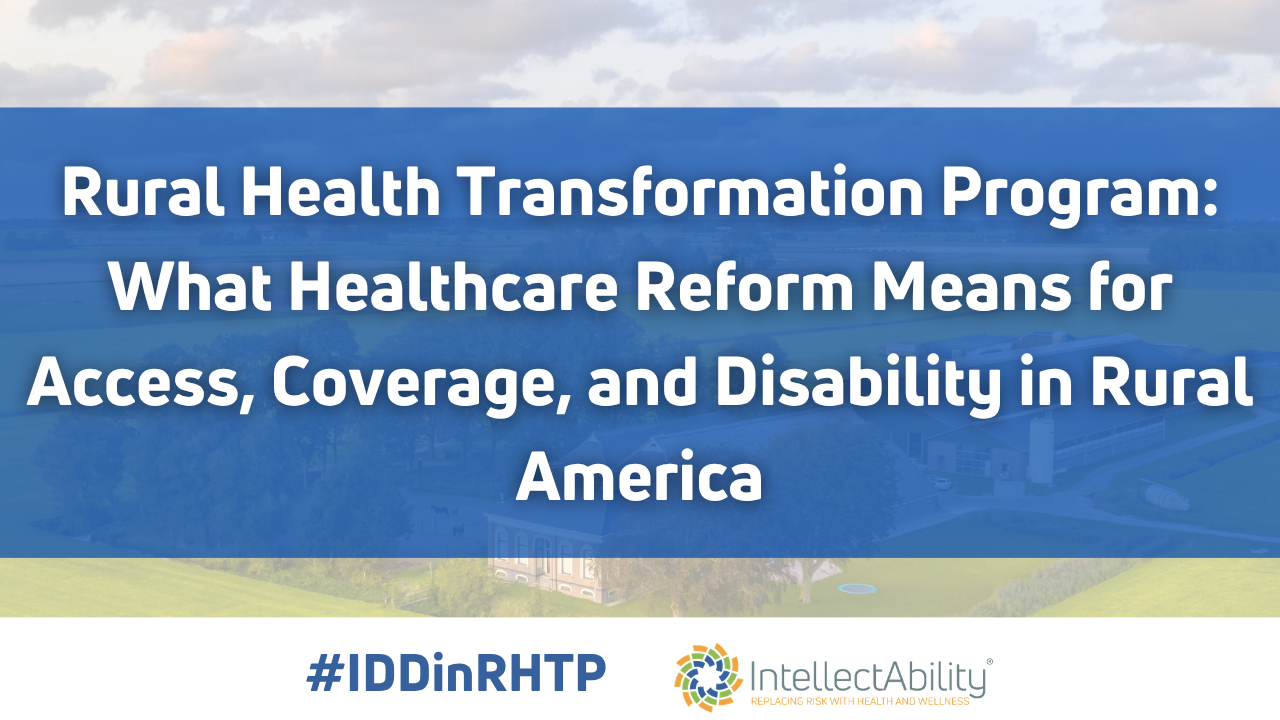
Rural Health Transformation Program: What Healthcare Reform Means for Access, Coverage, and Disability in Rural America
The Rural Health Transformation Program: The Imperative Role of State Developmental Disability Agencies
Rural Health Transformation Program: An Opportunity to Include People with IDD
How You Can Get Involved
Download and Share our #IDDinRHTP Social Media Kit
Our #IDDinRHTP Social Media Kit makes it easy to take action. Inside, you’ll find six ready-to-share graphics and example captions designed to help you raise awareness about why people with IDD must be included in Rural Health Transformation efforts. Download the kit, post the images across LinkedIn, Facebook, X, and Instagram, and use the sample captions—or personalize them with your own voice.
Be sure to include #IDDinRHTP in every post so we can build national momentum, tag your state legislators and federal representatives, and encourage your colleagues, provider networks, and advocacy partners to do the same. Share it in team meetings. Email it to your partners. Add it to your newsletters. The more we amplify this message together, the harder it is to ignore.
Let’s Transform Rural Health Systems Together
Sustainable Rural Health Transformation requires long-term commitment, shared learning, and strong partnerships across sectors. It depends on systems that are equipped to identify risk early, support their workforce, and deliver coordinated, equitable healthcare for people with complex needs.
IntellectAbility works alongside states, providers, and community organizations to build this foundation, helping rural networks move from fragmented services to resilient systems of support.
We are building a growing network of partners and supporters committed to ensuring people with IDD are included in rural health transformation efforts nationwide.
Whether you are exploring RHT readiness, strengthening existing initiatives, seeking new ways to advance disability-inclusive support, or want to partner with us or show your organization’s support, we invite you to connect.