A Second Wave? How Parents of Kids with Cognitive Disabilities Can Prepare

A Second Wave? How Parents of Kids with Cognitive Disabilities Can Prepare

Disability Tribune, July 2020

A Second Wave? How Parents of Kids with Cognitive Disabilities Can Prepare

By Dr. Craig Escudé, MD, FAAFP, FAADM

Should we fear a second wave of COVID-19? I’d suggest preparing but keeping fear to a minimum. There are a few good reasons why we may be less likely to have an intense second wave than we were in past pandemics:

  1. Near instantaneous transfer of information. The lightning speed at which new cases can be identified, pinpointed and contacts traced will help reduce the likelihood of a quick spread to a large group.
  2. The widespread availably of testing will help to identify cases rapidly and isolate them.
  3. Better sanitation procedures including hand washing and the availability of hand sanitizers. The importance of cleanliness and the availability of cleaning supplies and sanitizers compared to past pandemics will certainly help.
  4. Greater understanding of the disease itself, the early symptoms and the risks of transmission will help to focus our efforts to stay healthy where they have the most benefit.

Remember that numbers can be misleading. When looking at the numbers of cases that are being reported, focus on the trends and not just the number itself, because the more testing that’s done, the higher the number of positive cases that will be reported. It’s a better indicator to look at the percentage of positive tests rather than just total number of positive ones.

Kids with a cognitive disability and COVID-19

Nonetheless, people with cognitive disabilities, also known as intellectual and developmental disabilities (IDDs), are at greater risk of death from a COVID-19 infection according to a new study. People with IDD had higher prevalence of specific comorbidities associated with poorer COVID-19 outcomes. Distinct age-related differences in COVID-19 trends were present among those with IDD, with a higher concentration of COVID-19 cases at younger ages. In addition, while the overall case-fatality rate was similar for those with IDD (5.1%) and without IDD (5.4%), these rates differed by age: ages ≤17 – IDD 1.6%, without IDD <0.01%; ages 18–74 – IDD 4.5%, without IDD 2.7%; ages ≥75– IDD 21.1%, without IDD, 20.7%. The study concluded that, though of concern for all individuals, COVID-19 appears to present a greater risk to people with IDD, especially at younger ages.

What can you do to stay healthy?

  1. Practice good hygiene. Wash your hands regularly and teach your loved ones to do the same. Modeling behavior that we want others to do is an important, non-verbal way to communicate healthy practices.
  2. Have a supply of hand-sanitizer available. Use ones that are at least 60% alcohol and use them regularly. Take care to prevent ingestion by those who love to “sample” new things.
  3. Ensure an adequate supply of a person’s medications in the event that trips to a pharmacy become difficult.
  4. Fortify supplies of household items, personal care items and cleaning supplies before a shortage might present itself.
  5. Encourage appropriate mask-wearing. For those that might have difficulty wearing one, there are a few tips below.
  6. Strengthen your support network to provide assistance with daily life in the event that members of your usual support system become ill or affected by a new quarantine.
  7. Expand the availability of activities and entertainment should the need for social distancing or quarantine become necessary. This might include online visits with friends, web-based group activities and outdoor activities that can be done during these times.

Masks can play a role in reducing the spread of infection. They seem to be better at keeping someone who is infected from unknowingly spreading disease than the other way around. Regardless, some places require a mask to be worn and some people with disabilities may be strongly resistant to the practice.  Here are a few ways to encourage mask-wearing:

  1. Model it. When people see others wearing a mask, they are more likely to feel comfortable doing it themselves.
  2. Make it fun. Let them help in either picking out or designing their own mask. If a person likes superhero movies, find one that wears a mask and show them that it can be pretty cool! Many old western movies show mask-wearers, as well.
  3. If they have a favorite stuffed animal, put a mask on them, too!
  4. Let them carry a mask around, even if they don’t want to wear it. It may help them feel comfortable having one around and later they may decide it’s OK to wear.

For more mask-wearing tips check this out.

Many of the suggestions in this article are good practices regardless of the presence of a pandemic. They could come to serve you well for pandemics, natural disasters or other emergency situations. Remember the old Boy Scout motto: Be Prepared!

Dr. Escude is a board-certified family physician and one of the few Fellows of the American Academy of Developmental Medicine. His is the president of Health Risk Screening, Inc. which specializes in risk identification and prevention in people with IDD and other vulnerabilities

Published by the Disability Tribune 

Dr. Craig Escudé of Health Risk Screening: “5 Things We Must Do To Improve The US Healthcare System”

“It’s important that we teach healthcare providers the needed skills to meet healthcare needs of people with disabilities so that anyone with any condition can walk into any office and receive competent healthcare.”

As a part of my interview series with leaders in healthcare, I had the pleasure to interview Dr. Craig Escudé.

Dr. Craig Escudé is a board-certified Fellow of the American Academy of Family Physicians and one of the very few Fellows of the American Academy of Developmental Medicine. He is also the president of Health Risk Screening, Inc. He served as medical director of Hudspeth Regional Center in Mississippi and is the founder of DETECT, the Developmental Evaluation, Training and Educational Consultative Team of Mississippi. He has more than 20 years of clinical experience providing medical care for people with IDD and complex medical conditions and is the author of “Clinical Pearls in IDD Healthcare” and the “Curriculum in IDD Healthcare.”

Thank you so much for doing this with us! Can you tell us a story about what brought you to this specific career path?

After completing my residency in family medicine at the University of Mississippi Medical Center, I began practicing family medicine at a Federally Qualified Health Center in a small town in Mississippi. There was a need at a nearby state mental hospital for nighttime, on-site call coverage. I started working there in 1997 and found that providing healthcare for people with serious mental illness and with intellectual disabilities was my calling. I transitioned to full-time work at the hospital and became the medical director of Hudspeth Regional Center, a residential program for people with severe and profound levels of intellectual and developmental disabilities (IDD).

I quickly learned that medical school had not prepared me for providing healthcare to people with disabilities and began efforts to educate practicing healthcare providers about this important field of medicine. That led to the creation of a program in the state called DETECT; the Developmental Evaluation, Training and Educational Team of Mississippi. I provided education to hundreds of healthcare providers and administrators in the state through this program.

In 2017, an opportunity to work in the field on a national level presented itself. I became president of Health Risk Screening, Inc. (HRS) in 2018. HRS is the sole developer and distributor of the Health Risk Screening Tool (HRST), the most widely used, validated screening instrument for people with disabilities. At HRS, I focus on public relations and the development of educational tools for healthcare providers and supporters of people with disabilities.

Can you share the most interesting story that happened to you since you began leading your company?

How about heartwarming? I gave a lecture to a large group of nurses who work in the field of IDD healthcare about how behaviors can be an underlying sign of illness in people with IDD. A year later I was invited again to speak to the same group. I had a nurse come up to me and tell me about one of her patients. The patient’s support team was “at their wit’s end” regarding his challenging and disruptive behavior….


Journal of Nursing Measurement Vol 28 Issue 1

Journal of Nursing Measurement Vol 28 Issue 1

Journal of Nursing Measurement Vol 28 Issue 1

Methods: The sample consisted of 12,582 people with an intellectual or developmental disability residing in Georgia (U.S.). Data were analyzed using survival analysis (Kaplan-Meier estimate and Cox regression) and a binary logistic regression.

Results: All models supported the prognostic value of the six-level health risk classification. The Kaplan-Meier procedure showed clear separation among functions. The Cox proportional hazard regression revealed that hazard is inversely related to the health risk level, even after controlling for potential confounding by gender, ethnicity, and race.

Conclusions: The HRST can predict mortality. Therefore, it can serve as a basis for establishing healthcare needs and determining nursing care acuity.

HRS Press Release On COVID-19


Amidst COVID-19 Pandemic, HRS’s Health Risk Screening Tool Could Save Lives of People with Intellectual Disabilities

As COVID-19 disproportionately affects the lives of society’s most vulnerable, caregivers of people with intellectual and developmental disabilities (IDD) are left unprepared.

But the efficacy validation by the Journal of Nursing Measurement of the Health Risk Screening Tool (HRST) for assessing mortality risk helps them plot a course of action to save lives.

The rampant spread of COVID-19 shows that calculating risk factors for vulnerable populations is a matter of life and death. That’s proven in a study conducted by researchers at UNSW showing people with an intellectual and development disability (IDD) are twice as likely to die from a preventable death.(1) High-risk groups, like those with IDD, lack the ability for caregivers to perform simple risk assessments that could save lives. Though that is changing, as the Health Risk Screening, Inc.’s Health Risk Screening Tool (HRST) for identifying risk in people with IDD has been endorsed by the Journal of Nursing Measurement.(2)

According to Dr. Craig Escudé, the president of Health Risk Screening, Inc., it’s never been more critical in understanding the risks of COVID-19 for this more vulnerable group of individuals, and even more important is being able to take steps to mitigate such risks. “Healthcare professionals and caregivers are at a huge disadvantage in providing care for those with IDD during the COVID-19 pandemic,” Dr. Escudé says. “This leaves them helpless in assessing mortality risk and providing care for their patients and loved ones.”

IDD Health Risk Screening and Advocacy

The time-tested HRST is a web-based tool currently used in 26 states that determines the mortality risk level of people with IDD to ensure that the support staff for these individuals know precisely when and how to act. The efficacy endorsement from the peer reviewed Journal of Nursing Measurement shines an important light on the growing use of the HRST. As the leading nursing journal, Journal of Nursing Measurement focuses on addressing instrumentation, tools, and approaches in regard to nursing, research practice, and education.

The efficacy of the HRST to predict mortality was validated by a study of 12,582 people with IDD residing in the state of Georgia. The study results showed that the HRST can predict mortality through health risk assessment. Therefore, it can serve as a basis for establishing healthcare needs and determining nursing care acuity for people with IDD.

When it comes to easily transmittable viruses—like COVID-19—that may even lead to death, society’s most vulnerable have always been at a much greater risk. But the current pandemic is revealing an acute problem, in which cities and states are putting those with IDD at an even greater risk. This can be seen in the pushback by disability advocates that have lodged complaints with the HHS Office for Civil Rights. The groups target the coronavirus response plans of several states that they claim would jeopardize people with disabilities.(3)


Risk and Mortality with IDD and COVID-19

People with comorbidities—which can be prevalent among those with IDD, according to the Centers for Disease Control and Prevention—may be more susceptible to severe illness and death from COVID-19.(4)

According to Dr. Escudé, people with intellectual and developmental disabilities encounter five common challenges that put them at a higher risk for illnesses like COVID-19:

  1. A higher percentage of people with disabilities have comorbidities, such as diabetes and other conditions.
  2. Some may have restrictions in their ability to take deep breaths or even cough effectively due to musculoskeletal issues.
  3. Those with higher rates of aspiration may have scarring of their lungs.
  4. Some habitually place items in their mouth, which can increase the risk of contact with infectious materials.
  5. Those who require frequent emergency department or medical visits may have increased exposure to people with illnesses.

Other leading experts on the topics of aging and intellectual disabilities agree that people with IDD are particularly vulnerable to adverse outcomes associated with COVID-19 due to having:(5)

  • Several health conditions.
  • Low levels of health literacy.
  • Reliance on others for their care.
  • Smaller networks and less social support than the general population.
  • Reduced comprehension regarding the need for visiting restrictions.
  •  

Performing a health risk screening on someone with IDD determines their level of risk as well as provides actionable steps to mitigate that risk from a number of different conditions. This data can be used to reroute scarce human and financial resources to where they will be most effective. This not only lowers the risk for people with IDD, but it also helps lower the spread of COVID-19 for the general population.

Furthermore, for those who have relied on the HRST prior to COVID-19, many are already seeing the advantages of having the resource available throughout the crisis, such as with the nonprofit organization, CADES (Children and Adult Disability and Educational Services). “We implemented HRST two years ago, and it has been our foundation through this pandemic, and for that we are so grateful. Keep leading us!” says Julie Alleman, MSS, the CEO of CADES. Such testimonials show just how beneficial the HRST tool can be when it comes to reducing risks for those already faced with the challenges of IDD, especially during such critical and uncertain times.

“We are all in this fight against COVID-19 together,” Dr. Escudé says. “With each state knowing that the HRST is a proven way to identify those most at risk for serious consequences from illnesses such as COVID-19 via the Journal of Nursing Measurement, they’re empowered with action steps to help mitigate that risk.”=


About Health Risk Screening, Inc.

Health Risk Screening, Inc.’s roots began in 1992. Along with training courses, webinars, and materials, HRS is the sole developer, producer, and distributor of the web-based Health Risk Screening Tool (HRST). The HRST is the most widely used and validated health risk screening instrument for people with intellectual and developmental disabilities.

HRS’s focus is on developing tools and training for the person-centered support of such vulnerable populations. Through the education of government agencies and service providers, HRS aims to improve lives. With unrelenting focus, HRS works to fulfill its mission of improving the health and quality of life for people faced with these types of vulnerabilities. To learn more, visit https://hrstonline.com.


1. Dan Wheelahan. “People with intellectual disability are twice as likely to die a preventable death,” UNSW Sydney Newsroom, February 8, 2017, newsroom.unsw.edu.au/news/health/people-intellectual-disability-are-twice-likely-die-preventable-death

2. Roszkowski, Michael J., PhD, Thomas, Michael M., MS, Conroy, James W., PhD, Ivy, Catherine, MS, LCSW, Gravitt, Gwendell W.Jr., PhD. An Examination of the Validity of the Health Risk Screening Tool: Predicting Mortality in People With Intellectual Disabilities, Journal of Nursing Measurement, Springer Publishing Company Connect, March 16, 2020, connect.springerpub.com/content/sgrjnm/early/2020/03/16/jnm-d-18-00088

3. Shaun Heasley. “Trump Administration Says Disability No Reason To Deny COVID-19 Care,” Disability Scoop, March 30, 2020, disabilityscoop.com/2020/03/30/trump-administration-says-disability-no-reason-to-deny-covid-19-care/28065/

4. Blythe Bernhard. “Coronavirus Brings Added Worries For People With Disabilities” Disability Scoop, March 17, 2020, disabilityscoop.com/2020/03/17/coronavirus-brings-added-worries-disabilities/27989/

5. Deborah Condon. “COVID-19 and intellectual disabilities Particularly vulnerable group,” Irishhealth.com, Mar 23, 2020, irishhealth.com/article.html?id=27072


Media Inquiries

Karla Jo Helms
JOTO PR
727-777-5140

Kimberly Zambrello
JOTO PR
727-777-4622

www.jotopr.com


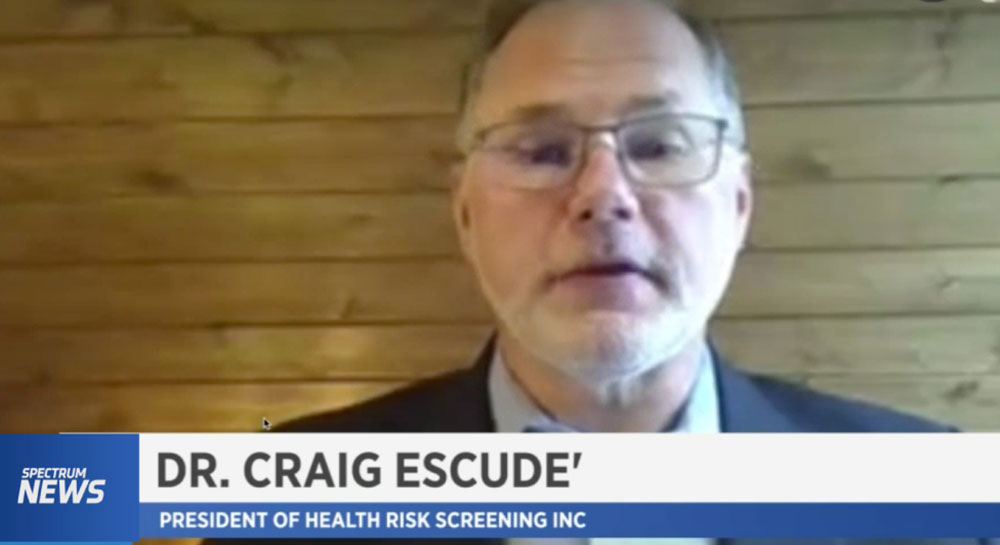
Bay News 9 Interview with HRS President Dr. Craig Escudé

Bay News 9 Interview with HRS President Dr. Craig Escudé

Bay News 9, April 2020

Bay News 9 Interview with HRS President Dr. Craig Escudé

How Coronavirus Concerns Can Impact Those with Mental Disabilities

Bay News 9 requested HRS Inc President, Dr. Craig Escude, to weigh in on the subject of COVID-19 and people with IDD.

“ Sometimes people with disabilities are more sensitive to changing of routines or environments or their support staff, and again that presents additional challenges,” said Dr. Craig Escudé, President of Health Risk Screening, Inc. “And sometimes that comes out as an adverse behavior simply because the person is trying to communicate what they’re feeling.”