New Study Finds That Specialized Care Reduces ER Visits for Americans with Intellectual and Developmental Disabilities

New Study Finds That Specialized Care Reduces ER Visits for Americans with Intellectual and Developmental Disabilities

Enhanced provider education and training lead to reduced healthcare costs and better health outcomes for disabled Americans.

“Specialized training equips providers with the knowledge and confidence they need to recognize and address the unique health needs of people with intellectual and developmental disabilities”

— Dr. Craig Escudé, President of IntellectAbility

CLEARWATER, FL, UNITED STATES, June 25, 2025 /EINPresswire.com/ — Emergency Room (ER) visitation rates are significantly more frequent among adults with intellectual and developmental disabilities (IDD). A new study, published by the University of Florida College of Medicine, found that enrolling adults with disabilities in specialized care programs significantly decreased the need for emergency care services.

Published on April 3, 2025, the study tracks how specialized care programs, specifically the Program for Adults With Intellectual and Developmental Disabilities (PAIDD), impact the rate of ER visits for people with IDD. Those enrolled in PAIDD saw a statistically significant decrease in ER visits compared to adults with IDD who received care outside the program.

People with IDD are at higher risk of severe health complications due to comorbidities, including aspiration, bowel obstruction, seizures, dehydration, and sepsis. Disabled adults suffering from these conditions face disproportionately higher mortality rates compared to those without disabilities.

“When adults with intellectual and developmental disabilities have access to clinicians trained in IDD-related health risk identification and mitigation, health issues are identified and treated early, helping to prevent serious complications and significantly reducing the need for emergency room visits,” said Dr. Craig Escudé, President of IntellectAbility and a family physician with extensive experience in providing healthcare for people with IDD.

IntellectAbility provides tools and training to agencies, governmental entities, and supporters of people with intellectual and developmental disabilities to foster early recognition and mitigation of health risks, thereby improving health and wellness.

States are increasingly turning to managed care organizations (MCOs) to improve both the cost and quality of care. MCOs work with a network of providers to manage their members’ long-term healthcare services and supports. With rising enrollment by individuals with IDD, MCOs are recognizing the need for enhanced provider education to support improved health outcomes and quality of life. IntellectAbility is partnering with leading MCOs to deliver specialized training that equips providers to identify early signs of health destabilization.

According to a survey conducted by Harvard Medical School, only 40.7% of physicians rated themselves as feeling “very confident” in their ability to provide equitable care to patients with disabilities], and just 56.5% strongly agreed [they welcomed patients with disabilities into their practices. In response to this gap, IntellectAbility has collaborated with managed care organizations to support provider training. Among them are health plans affiliated with Elevance Health, which have taken proactive steps to elevate provider education and improve care quality. IntellectAbility values the opportunity to support organizations like Elevance Health in their efforts to strengthen care for individuals with intellectual and developmental disabilities.

“Specialized training equips providers with the knowledge and confidence they need to recognize and address the unique health needs of people with intellectual and developmental disabilities—improving outcomes, building trust, and ultimately saving lives,” states Dr. Escudé. “When Managed Care Organizations, like Elevance Health affiliated plans, invest in training their provider networks, they become essential partners in reducing avoidable emergency room visits and promoting proactive, person-centered care.”

IntellectAbility provides tools and training to agencies, governmental entities, and supporters of people with intellectual and developmental disabilities to foster early recognition and mitigation of health risks, thereby improving health and wellness. One such tool is the Health Risk Screening Tool (HRST), of which they are the sole developer, producer, and distributor. The web-based HRST is the most widely used and validated health risk screening instrument for people with intellectual and developmental disabilities. IntellectAbility also provides numerous health-related and person-centered service training for supporters of people with IDD. With an unrelenting focus, IntellectAbility works to fulfill its mission of improving health and quality of life for people with intellectual and developmental disabilities and other at-risk populations.

DDNA and IntellectAbility Announce New Karen Green McGowan Memorial Scholarship Fund

DDNA and IntellectAbility Announce New Karen Green McGowan Memorial Scholarship Fund

New Scholarship benefits current and future nurses specializing in the care of patients with intellectual and developmental disabilities.


“This scholarship will honor our founder’s legacy by empowering future generations of nurses who want to dedicate their lives to improving the healthcare of people with IDD.”
— Dr. Craig Escudé, President of IntellectAbility
 

CLEARWATER, FL, UNITED STATES, June 25, 2025 /EINPresswire.com/ — The Developmental Disabilities Nurses Association (DDNA) recently announced the establishment of the Karen Green McGowan Memorial Scholarship. Honoring the former President of DDNA and Founder of IntellectAbility, the scholarship aims to support education for nurses and future nurses who specialize in the care of patients with intellectual and developmental disabilities (IDD).

Karen Green McGowan passed away on April 2, 2025, at the age of 84. A lifetime advocate of people with disabilities, she was a visionary whose work transformed the field of IDD supports and services. McGowan was central to the establishment of the DDNA and instrumental in creating the initial certification process for the specialty of developmental disabilities nursing.

“This scholarship was created in recognition of Karen Green McGowan’s extraordinary impact on intellectual and developmental disabilities nursing,” said S. Diane Moore, Executive Director of DDNA. “We are honored to celebrate Karen’s memory through this scholarship. Her legacy will live on through the lives of the nurses and future nurses who benefit from this support.”

McGowan began her career as a nurse in 1962 at Mailstrom Air Force Base. After moving back to her home state of Iowa in 1965, she accepted a position at Glenwood State Hospital School, an institution for people with severe intellectual disabilities. Early on, McGowan saw an urgent need for better education and training. She authored numerous training manuals for clinicians on the physical and nutritional management of people with disabilities, filling a critical gap in available resources.

In 1992, while consulting on the transition of 240 people from institutions to community settings, McGowan was asked to develop a way to determine who required specialized care. She assembled a team of innovative nurses to create an effective solution using key health indicators such as eating ability and mobility. The result was the Health Risk Screening Tool (HRST), a 22-item screening tool that evaluates risks in critical areas.

As demand for the HRST and educational resources grew, McGowan founded IntellectAbility, formerly known as Health Risk Screening, Inc., an organization dedicated to equipping supporters, clinicians, and administrators with tools and training to improve health outcomes for people with disabilities.

Central to the organization’s approach was McGowan’s commitment to Person-Centered Planning and Person-Centered Thinking, which emphasize the importance of tailoring support to each person’s unique needs, preferences, and aspirations. Now an industry leader, IntellectAbility’s HRST has transformed how health risks are identified and managed, ensuring people with IDD receive the care and support they need to thrive.

“We are honored to donate $10,000 to the establishment of the Karen Green McGowan Memorial Scholarship,” said Dr. Craig Escudé, President of IntellectAbility. “This scholarship will honor our founder’s legacy by empowering future generations of nurses who want to dedicate their lives to improving the healthcare of people with intellectual and developmental disabilities.”

The Karen Green McGowan Memorial Scholarship will become available in 2026 to student nurses with an interest in IDD nursing and for practicing nurses who are striving to further their education in the specialty. Donations to support this scholarship fund may be made directly through the Developmental Disabilities Nurses Association.

The Developmental Disabilities Nurses Association (DDNA) is a 501(c)(3) not-for-profit nursing specialty organization that is committed to advocacy, education, and support for nurses who provide services to persons with developmental disabilities (DD). Established in 1992, DDNA’s goal is to foster the growth of nursing knowledge and expertise about optimal care of persons with DD, thereby improving their care, services, and quality of life. Through its efforts, DDNA offers members the opportunity to network with other DD nurses and explore common issues, helping to identify practical solutions to some of today’s most challenging concerns. DDNA works tirelessly to advocate for DD nursing at every opportunity, collaborating with other professional organizations relating to the field of DD and representing its members among the greater nursing and healthcare communities.

IntellectAbility provides tools and training to agencies, governmental entities, and supporters of people with intellectual and developmental disabilities to foster early recognition and mitigation of health risks, thereby improving health and wellness. One such tool is the Health Risk Screening Tool (HRST), of which they are the sole developer, producer, and distributor. The web-based HRST is the most widely used and validated health risk screening instrument for people with intellectual and developmental disabilities. IntellectAbility also provides numerous health-related and person-centered service training for supporters of people with IDD. With an unrelenting focus, IntellectAbility works to fulfill its mission of improving health and quality of life for people with intellectual and developmental disabilities and other at-risk populations. 

Karen Green McGowan, Founder of IntellectAbility, Passes Away Leaving Behind Legacy of Advocacy and Education

Karen Green McGowan, Founder of IntellectAbility, Passes Away Leaving Behind Legacy of Advocacy and EducationKaren Green McGowan

IntellectAbility continues Karen McGowan’s legacy of improving the health and well-being of people with intellectual and developmental disabilities.
She was a friend, a mentor, and the heart of our mission. Her legacy lives on in the work we do, and we’ll carry it forward with the same heart and purpose that guided her every day.”
— Dr. Craig Escudé, President of IntellectAbility
CLEARWATER, FL, UNITED STATES, April 9, 2025 /EINPresswire.com/ — Karen Green McGowan, Founder of IntellectAbility, former President of the Developmental Disabilities Nurses Association, and lifetime advocate for people with intellectual and developmental disabilities (IDD), passed away on April 2, 2025, at the age of 84. McGowan was a visionary whose work transformed the field of IDD supports and services. Karen McGowan began her career in healthcare in 1962 as a labor and delivery nurse at Mailstrom Air Force Base in Montana. She helped deliver hundreds of babies at Mailstrom before marrying in 1965 and moving back to her home state of Iowa. Soon after, she accepted a position at Glenwood State Hospital School, an institution for people with severe intellectual disabilities. McGowan’s mentors had cautioned her about working at Glenwood, where overcrowding, neglect, and extremely high mortality rates were the norm. Their concerns reflected the stark reality of the time. People with disabilities were often devalued, and the field was seen as a professional dead end. But McGowan saw it as an opportunity to create positive change and make a difference in patients’ lives. Recognizing the need for better education and training in the field, Karen became deeply invested in equipping others with the knowledge to provide quality care. She authored numerous training manuals for clinicians on the physical and nutritional management of people with disabilities, filling a critical gap in available resources. Driven by her passion for education, McGowan became an independent clinical nurse consultant in 1977. As a consultant, Karen provided technical assistance to more than 40 states and nine Canadian provinces. She also consulted internationally with Disability Rights International, assessing care conditions in Romania, Serbia, the Republic of Georgia, Mexico, and Ukraine. In 1992, while consulting on the transition of 240 people from institutions to community settings, Karen was asked to develop a way to determine which of them required specialized care. She assembled a team of innovative nurses to create an effective solution using key health indicators such as eating ability and mobility. The result was the Health Risk Screening Tool (HRST), a 22-item screening tool that evaluates risks in critical areas. As demand for the HRST and educational resources grew, Karen founded IntellectAbility, formerly known as Health Risk Screening, Inc., an organization dedicated to equipping supporters, clinicians, and administrators with tools and training to improve health outcomes for people with disabilities. Central to the organization’s approach was Karen’s commitment to Person-Centered Planning and Person-Centered Thinking, which emphasize the importance of tailoring support to each person’s unique needs, preferences, and aspirations. Now an industry leader, the HRST has transformed how health risks are identified and managed, ensuring people with IDD receive the care and support they need to thrive. In line with her commitment to reducing risk, Karen played a key role in popularizing the term Fatal Five – a phrase used to highlight the most preventable causes of death among people with IDD. Building on the previously recognized Fatal Four, she added sepsis and later gastroesophageal reflux disease (GERD) to the original list, which included aspiration, constipation, dehydration, and seizures. By equipping supporters with critical knowledge to recognize and respond to these risks, Karen helped establish terminology and awareness that continue to shape best practices in the IDD field today. “We are deeply saddened by the passing of our founder. Her vision, compassion, and unwavering dedication to people with intellectual and developmental disabilities built the foundation of IntellectAbility,” said Dr. Craig Escudé, President of IntellectAbility. “Karen was more than a leader — she was a friend, a mentor, and the heart of our mission. Her legacy lives on in the work we do, and we’ll carry it forward with the same heart and purpose that guided her every day.” IntellectAbility provides tools and training to agencies, governmental entities, and supporters of people with intellectual and developmental disabilities to foster early recognition and mitigation of health risks, thereby improving health and wellness. One such tool is the Health Risk Screening Tool (HRST), of which they are the sole developer, producer, and distributor. The web-based HRST is the most widely used and validated health risk screening instrument for people with intellectual and developmental disabilities. IntellectAbility also provides numerous health-related and person-centered service training for supporters of people with IDD. With an unrelenting focus, IntellectAbility works to fulfill its mission of improving health and quality of life for people with intellectual and developmental disabilities and other at-risk populations. For more information, visit www.ReplacingRisk.com

Daniel Mutter MutterWorks +1 305-926-1792 daniel@mutterworks.com

Tools to Assess Emotional Well-Being for People with Intellectual Disabilities are Lacking, New Study Finds

Tools to Assess Emotional Well-Being for People with Intellectual Disabilities are Lacking, New Study Finds

Specialized training and tools are required to improve emotional well-being and the overall health of people with intellectual and developmental disabilities.


It’s known that emotional stressors can lead to increased risk for heart disease, poorer glucose control for people with diabetes, and early death.”

— Dr. Craig Escudé, President of IntellectAbility
CLEARWATER, FL, UNITED STATES, March 25, 2025 /EINPresswire.com/ — A newly released study published by researchers at the University of Connecticut found significant gaps in assessing the emotional well-being of children and adolescents with intellectual disabilities. Researchers noted few measures exist to assess the emotional well-being of those with severe or profound intellectual disabilities.

According to the study, emotional well-being has been connected to positive social, emotional, behavioral, and health outcomes for people with intellectual disabilities. Those with higher levels of emotional well-being are more likely to participate in fulfilling activities, cultivate meaningful relationships, and have stronger feelings of inclusion. Emotional well-being may also encourage resilience. (1)

While emotional well-being is an integral part of improving overall physical and mental health, the available tools and metrics are typically developed for people without disabilities. Individuals with intellectual and developmental disabilities (IDD) who experience higher mortality rates than non-disabled individuals continue to suffer disproportionately from unrecognized and underdiagnosed emotional distress.

People living with IDD express emotional well-being differently than those without disabilities. For example, many people with IDD do not use words to communicate, which makes it difficult to simply ask, “How are you feeling?” As a result, physicians and supporters must develop more customized parameters to examine signs of emotional instability.

“For people with IDD, early signs of emotional distress may appear as a prolonged change in a person’s demeanor, significant changes in behavior, or a notable change in a person’s baseline level of interaction with others,” states Dr. Craig Escudé, President of IntellectAbility. “Being attuned to identifying these changes is essential for family members and supporters to recognize and report these changes so that interventions can be implemented early.”

IntellectAbility provides tools and training to agencies, governmental entities, and supporters of people with IDD to foster early recognition and mitigation of health risks. By providing person-centered training, IntellectAbility helps caregivers and physicians empower people with IDD to live healthier, more fulfilling lives.

Emotional distress can lead to serious and often deadly health issues for people with IDD. “It’s known that emotional stressors can lead to increased risk for heart disease, poorer glucose control for people with diabetes, and early death. Stress also can worsen the risks for obesity, Alzheimer’s disease, depression, and gastrointestinal problems,” states Dr. Escudé.

For many people with IDD, signs of stress are exhibited by changes in behavior. IntellectAbility developed the Health Risk Screening Tool (HRST) to better assess health destabilization in people with IDD. The tool looks at 22 specific areas of risk, including five that specifically relate to behavior: self-abuse, aggression, the need for physical behavior support, chemical behavior support, and the use of psychotropic medications.

Dr. Escudé notes, “One’s overall emotional state heavily influences their overall quality of life. For people with IDD who are already subject to social isolation, higher rates of mental health issues, and increased numbers of chronic diseases, implementing interventions to improve overall emotional well-being is exceedingly important. And, it starts with having an effective way to screen for it.”

IntellectAbility provides tools and training to agencies, governmental entities, and supporters of people with intellectual and developmental disabilities to foster early recognition and mitigation of health risks, thereby improving health and wellness. One such tool is the Health Risk Screening Tool (HRST), of which they are the sole developer, producer, and distributor. The web-based HRST is the most widely used and validated health risk screening instrument for people with intellectual and developmental disabilities. IntellectAbility also provides numerous health-related and person-centered service training for supporters of people with IDD. With an unrelenting focus, IntellectAbility works to fulfill its mission of improving health and quality of life for people with intellectual and developmental disabilities and other at-risk populations. For more information, visit www.ReplacingRisk.com

Sources:

1. https://today.uconn.edu/2025/03/new-study-finds-gap-in-tools-assessing-emotional-well-being-in-individuals-with-intellectual-disabilities/

5 Minutes in Healthcare – Featuring Dr. Craig Escudé

5 Minutes in Healthcare – Featuring Dr. Craig Escudé

Healthcare Business, November 2020

5 Minutes in Healthcare

Five Minutes in Healthcare is where I discuss current events with some of the industry’s most influential leaders, as well as innovative thinkers who are working to meet the challenges of the novel coronavirus.

In this installment, I check in with Dr. Craig Escudé, president of Health Risk Screening, about the challenges of providing care to individuals with an intellectual or developmental disability (IDD) and how new tools can support those efforts. Recognizing the needs of patients with IDDs is especially important during COVID-19.

Click here to watch the interview.

About Phil Jacobus

Phil Jacobus has been involved in health care since 1977, when he visited China to sell equipment. He has done business in 35 countries and still travels extensively. Phil is active in charity, helps rural clinics and always tries to help DOTmed users when he can.

Phil is a founding member of IAMERS and a member of AHRA, HFMA, AAMI and the Cryogenic Society of America. He has contributed to a number of magazines and journals and has addressed trade groups.

Phil’s proudest achievement is that he has been happily married to his wife Barbara since 1989, who helped him found DOTmed in 1998.

NC Healthcare Workers Address Disability Nutrition Gap

Western NC Healthcare Workers Aim to Bridge Nutritional Gap for People With Disabilities

by: 

Originally Aired and Published February 24, 2025

ARDEN, N.C. (WSPA) – A western North Carolina organization is on a mission to improve healthcare for people with disabilities across the Carolinas beginning with what they eat.

Dr. Craig Escude is the president of IntellectAbility. It’s an online tool that helps caregivers and healthcare providers meet the nutritional needs of someone with disabilities.

“For people with intellectual disabilities, many people have swallowing problems as well, so even if they can have access to healthy foods, they may still be at risk because of swallowing trouble that can cause aspiration and can result in hospitalization, or even unnecessary and preventable deaths,” said Escude.

Escude said the IntellectAbility courses can be one to four hours long. He explained they offer interactive training in how to recognize the signs a person with disabilities is struggling with malnutrition and other health issues. According to Escude, one in three families of adults with disabilities experience food insecurity. He said those conditions are often misdiagnosed.

“People who have intellectual disabilities typically have more challenges in finding gainful employment,” Escude added. “And in receiving and retaining higher educational levels, and all of this impacts their ability to be able to have purchasing power; to purchase healthier foods, and good foods that can improve their overall health.”

Escude went on to say those who are interested in taking IntellectAbility courses can reach out to the South Carolina Department of Disabilities and Special Needs for access.

Originally published on WSPA 7 

Watch 2 minute interview here.

New Study: Food Insecurity Greatly Affects Missourian IDD Families

New Study Reports Food Insecurity Greatly affects Missourians with Disabled Family Members

Originally Aired and Published February 26, 2025

In Missouri, one in every seven households is left hungry. United States Department of Agriculture (USDA) Economic Research Service found that nearly one-third of American households with a disabled adult family member experience low food security. Dr. Craig Escude, a family physician and specialist in intellectually and developmentally disabled individuals reported an increased likelihood of these factors in Missouri.

“Around a million people in Missouri are affected by food insecurity. The recently released study showed that people with a family member with a disability, that includes those with intellectual and developmental disabilities have about a three times higher risk of experiencing food insecurity,” said Escude.

The inability of disabled individuals and caregivers to maintain steady income as well as medical expenses are factors that directly contribute to the increased risk of food insecurity.

“I have cerebral palsy I’ve had that my whole life, and I’ve had to fight my way through probably harder than everyone else,” said Duane Gruis, an advocate and family navigator for disability service organization, UCP Heartland.

Wednesday brought several other advocates for this cause to the Capitol Rotunda in honor of Disability Rights Legislative Day.

Kevin Litt, of UCP Heartland said these issues can be forgotten because of the lack of visibility of most disabled individuals.

“Some of the side effects is that people don’t see them because they tend to be stuck inside and are not able to get out as often as they like to. So, I think the importance of the advocacy is that we have a huge population in the state of Missouri with disabilities,” said Litt.

Some efforts that were advocated for at the capital included access to Medicaid coverage, state funding for disabled workers who make below minimum wage, and more.

Originally published on KRCG CBS13

Department of Education Changes Could Mean Greater Barriers for Children with Disabilities

Department of Education Changes Could Mean Greater Barriers for Children with Disabilities

Clearwater, February 12, 2025

By Daniel Mutter

A rise in developmental disability diagnoses in children creates greater need for improved special education standards in schools nationwide.

As President Donald Trump prepares to sign an executive order making good on his campaign promise to dismantle the U.S. Department of Education, parents nationwide are growing increasingly concerned about how these changes will affect students with intellectual and developmental disabilities (IDD).

The U.S. Centers for Disease Control and Prevention (CDC) reports that more American children than ever are being diagnosed with developmental disabilities. According to the CDC’s most recent report, close to 9% of children are now diagnosed with a developmental disability. These diagnoses are far more common among boys, as more than 1 in 10 boys ages 3-17 are currently diagnosed with an intellectual disability, autism spectrum disorder, or other developmental delays.

U.S. education programs are currently protected by a federal law known as the Individuals with Disabilities Education Act (IDEA). Originally known as the Education for All Handicapped Children Act and signed into law on November 29, 1975, IDEA states that all students have the right to a free, appropriate public education and schools must provide special education services to all students with qualifying disabilities.

IDEA governs how states and public agencies provide early intervention, special education, and related services to more than 8 million disabled students nationwide. Currently, the Education Department Office of Special Education monitors states for compliance with IDEA and issues reports detailing deficiencies and noncompliance.

Federal oversight is vital to the success of special education programs nationwide, especially as reports of special education teacher shortages continue to rise. According to the U.S. Department of Education, In the 2023-2024 school year, 80 percent of states reported experiencing these shortages.

“Like shortages in special education teachers, there are shortages of direct support professionals (DSPs) and healthcare providers trained to meet the needs of people with intellectual and developmental disabilities (IDD),” says Dr. Craig Escudé, President of IntellectAbility. These supports are instrumental in helping people with disabilities live healthier, more independent lives that they enjoy.”

IntellectAbility provides tools and training to agencies, governmental entities, and supporters of people with intellectual and developmental disabilities to foster early recognition and mitigation of health risks.

“Education tailored to meet individual needs benefits people of all abilities. Some need more help with math, some with English, and some with science. People with IDD need and benefit from specialized education, and when that is not available, it can create a potentially negative impact on their lives and their overall health.”

President Trump’s latest plan includes buyouts for Education Department employees to begin reducing the agency’s size. By eliminating the Department of Education, Trump hopes to place the management of public education in the hands of the states.

IntellectAbility provides tools and training to agencies, governmental entities, and supporters of people with intellectual and developmental disabilities to foster early recognition and mitigation of health risks, thereby improving health and wellness. One such tool is the Health Risk Screening Tool (HRST), of which they are the sole developer, producer, and distributor. The web-based HRST is the most widely used and validated health risk screening instrument for people with intellectual and developmental disabilities. IntellectAbility also provides numerous health-related and person-centered service training for supporters of people with IDD. With an unrelenting focus, IntellectAbility works to fulfill its mission of improving health and quality of life for people with intellectual and developmental disabilities and other at-risk populations.
Author Daniel Mutter can be reached at Daniel (at) mutterworks.com

Published in the EIN Presswire

Serious Gap in Healthcare Services Due to Lack of Training

Serious Gap in Healthcare Services Due to Lack of Training

Originally Aired and Published July 3rd, 2024

The latest numbers from the Centers for Disease Control and Prevention find autism and developmental disabilities on the rise.

A doctor who specializes in this field said people who have IDD, meaning intellectual or developmental disabilities, face a serious gap in healthcare services.

The gap is in the lack of training.

Medical students spend years training to become doctors, but Dr. Craig Escudé said there’s no mandated curriculum on how to spot or communicate with people who are intellectually or developmentally disabled.

“The first thing is awareness, including awareness of health care providers about the need to learn about health care for people with intellectual and developmental disabilities,” Escudé said.

Escudé said healthcare education hasn’t caught up with the rising numbers of IDD diagnoses.

According to the CDC, 1 in 36 children are now diagnosed with autism. One in 6 children are now diagnosed with a developmental disability.

Escudé said that when healthcare providers don’t recognize changes in their behavior, early signs of trouble are often missed.

“This is a term called diagnostic overshadowing, where early signs and symptoms of something are just attributed to the person’s overall condition, such as their intellectual disability. Rather than looking for a treatable underlying condition.” Escudé said.

He said the problem is that medical schools don’t include training on how to identify or communicate with patients who are intellectually or developmentally disabled.

Escudé said, “I can speak from my own personal experience as a family physician. I had no training in medical school or residency about how to provide good health care for people with IDD.”

Escudé said studies show many clinicians feel uncomfortable and incapable of providing the same level of health care for people with disabilities as those without disabilities.

Originally published on WXII News.

IntellectAbility’s New Screening for Social Determinants of Health for People with IDD

IntellectAbility’s New Screening for Social Determinants of Health for People with IDD

By Daleigh Tallent, MSN, RN, CDDN

Research continues to show people with intellectual and developmental disabilities (IDD) are at a high risk for health disparities, including a shorter life expectancy and earlier onset of age-related conditions 1, 2.

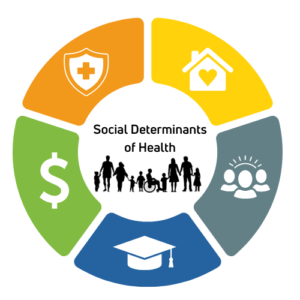
People with IDD are also more likely to have heart disease, osteoporosis, and high blood pressure compared to nondisabled people 2. However, these health disparities are not determined solely by the genetic makeup of a person with IDD. Nearly 80% of health outcomes are influenced by non-medical factors, with social determinants of health (SDOH) affecting as much as 50% 3. SDOH includes stable housing, food insecurity and access to nutritious foods, reliable transportation, health care access, safe neighborhoods, and many other socioeconomic aspects.

Why should we be concerned about SDOH?

If you’ve ever supported someone with IDD, you’ve likely encountered at least one of these SDOH challenges:

  • Obtaining accessible, affordable housing in a safe neighborhood
  • Addressing abuse, neglect, or exploitation of a person with IDD
  • Acquiring job placement where the person is paid fairly, can work as many hours as they wish, and has reliable transportation to and from work
  • Finding a school with early identification and intervention programs that effectively utilize individualized education plans (IEPs)
  • Locating quality primary and specialty care in the local community
  • Receiving health care from a provider who values the life of a person with IDD just as much as you do

These barriers can result in disparities that negatively impact a person’s functioning, social well-being, and overall health.

Health disparities and unmet SDOH can also lead to untimely death. This became starkly evident during the COVID-19 pandemic when people with IDD were often sent home from the emergency department when hospital resources were scarce or prevented from using their personal ventilators after being admitted 4.

Aren’t we already addressing SDOH?

Yes! Managing SDOH, such as housing, transportation, employment, and social integration, is not new to the field of IDD; it has been a core concept of IDD supports and services for over 40 years and resulted in increased life expectancy 5.

But! People with IDD and their supporters may have little to no control over systemic issues like inflation, infrastructure, and policies that impact socioeconomic status. They also face barriers within their very own communities including disability bias, diagnostic overshadowing, ableism, stigma, and discrimination. Confronting these multilevel social challenges requires time, money, and resources, which many IDD supporters do not have.

What can we do today to tackle unmet SDOH?

IDD support teams do not have to wait on public health system changes to see improvement in health outcomes and happiness for those they serve; we can start addressing SDOH today on an individual basis by Asking, Screening, and Advocating.

Ask

Meet with the person and ask them about their life, ambitions, and social needs. What’s important to them? What is preventing them from achieving their personal goals? Asking about SDOH often uncovers past or current trauma. It’s important for supporters to understand this and be able to respond appropriately.


Screen

Adopt a routine screening process for the identification of any SDOH barriers. Completing a social needs screening is generally not required by healthcare providers, so if you’re not screening in-house, social risks may be going unnoticed. SDOH screenings do not have to be completed by clinicians and should be done at regular intervals to identify any trends.

There are several free screening tools that already exist including the Protocol for Responding to and Assessing Patients’ Assets, Risks and Experiences (PRAPARE) and the American Academy of Family Physicians (AAFP) Social Needs Screening Tool 6,7. IntellectAbility has created the first screening tool specifically for people with IDD, which can be downloaded here.

Advocate

Connect the person with community-based organizations and resources. The website findhelp.org (formerly known as Aunt Bertha) helps people easily locate and access social services in their local area 8. Develop a person-centered plan for addressing immediate, short-term, and long-term SDOH concerns. Provide ongoing support and encouragement to the person and their support team.

Due to the intimate nature of this field, IDD supports and services are well-positioned to identify unmet SDOH for our population. Focused efforts have increased longevity for people with IDD, but there’s still work to be done to minimize dangerous health disparities and inequities. Tools and resources are available today to help you create and implement steps to address SDOH. Just by asking, screening, and advocating, you can improve health outcomes and happiness for those you support.


Sources

  1. https://ncd.gov/publications/2022/health-equity-framework
  2. https://www.c-q-l.org/wp-content/uploads/2021/07/CQL-Research-2020-SDOH-outcomes-ER-IDD-Friedman.pdf
  3. https://aspe.hhs.gov/sites/default/files/documents/e2b650cd64cf84aae8ff0fae7474af82/SDOH-Evidence-Review.pdf
  4. https://www.ncd.gov/report/an-extra/
  5. https://behavioralhealthnews.org/using-social-determinants-of-health-for-the-field-of-intellectual-and-developmental-disabilities/
  6. https://prapare.org/the-prapare-screening-tool/
  7. https://www.aafp.org/dam/AAFP/documents/patient_care/everyone_project/hops19-physician-form-sdoh.pdf
  8. https://www.findhelp.org/