The Lost Art of Person-Centered Coaching
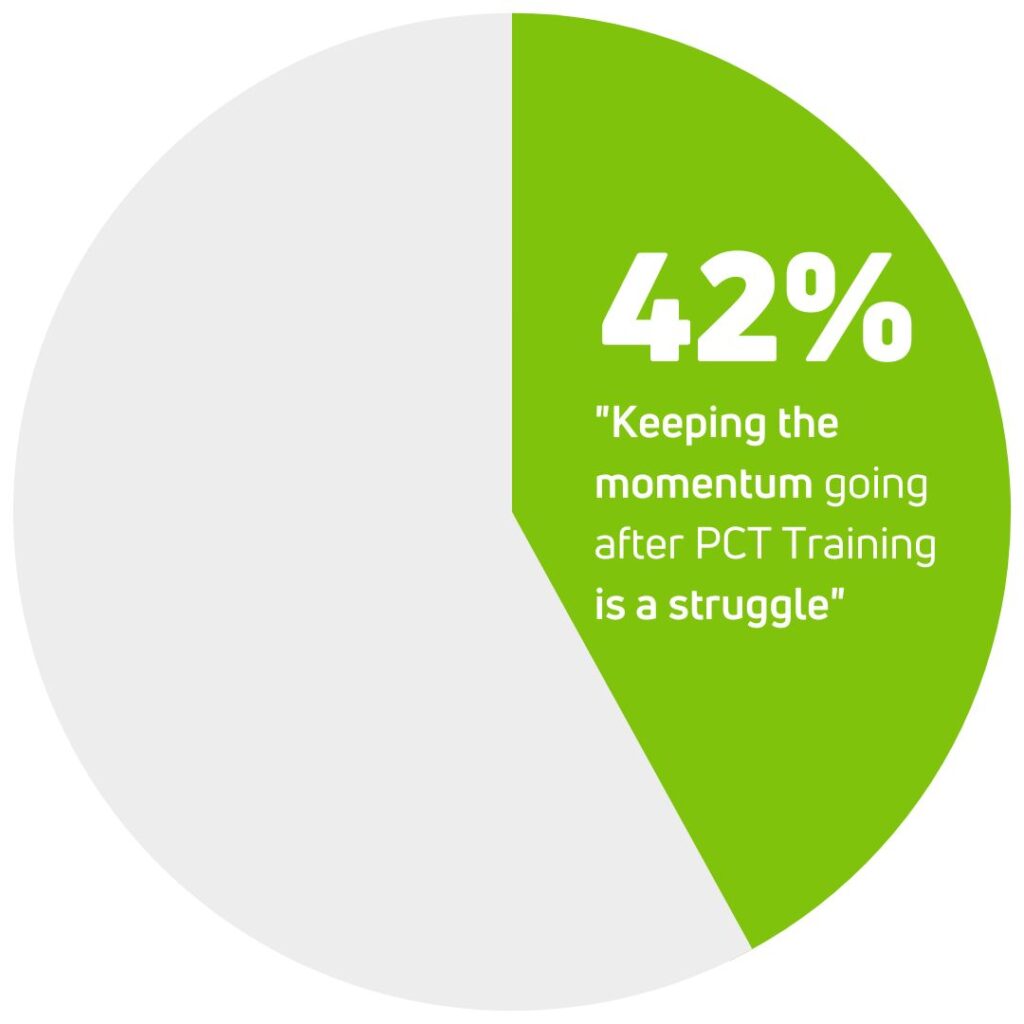
In our recent survey of about 700 supporters in the field of IDD, it was found that nearly 42% admitted that keeping the person-centered momentum going after Person-Centered Thinking training was a real struggle. When these supporters were asked what could keep the momentum going despite dynamics in the field, most of the responses echoed such things as:
“Ensuring that everyone feels confident and supported within their corporation and workplace.”
“Routine training. More people having the baseline understanding and passion of it and for it.”
“Ongoing communication and training about the status of approaches.”
PCT Training is Not Enough
PCT training lays a foundation, imparts valuable skills and techniques, and creates a positive expectation in the new, person-centered way one provides supports and services to people with IDD. What our survey revealed was what many of us know by experience is true- that just going to a Person-Centered Thinking (PCT) training is not enough.
There must be supports and structures in place that routinely challenge us to change how we think, respond, use, and propel the benefits that come from a person-focused approach. It is akin to pushing a kid on a bike with training wheels. When a push is given, the headwind, gravity, and friction are overwhelmed by the force of acceleration. However, without another push, acceleration will give way to these other more powerful forces, and the bike soon completely stops.
Person-Centered Coaching is an Art
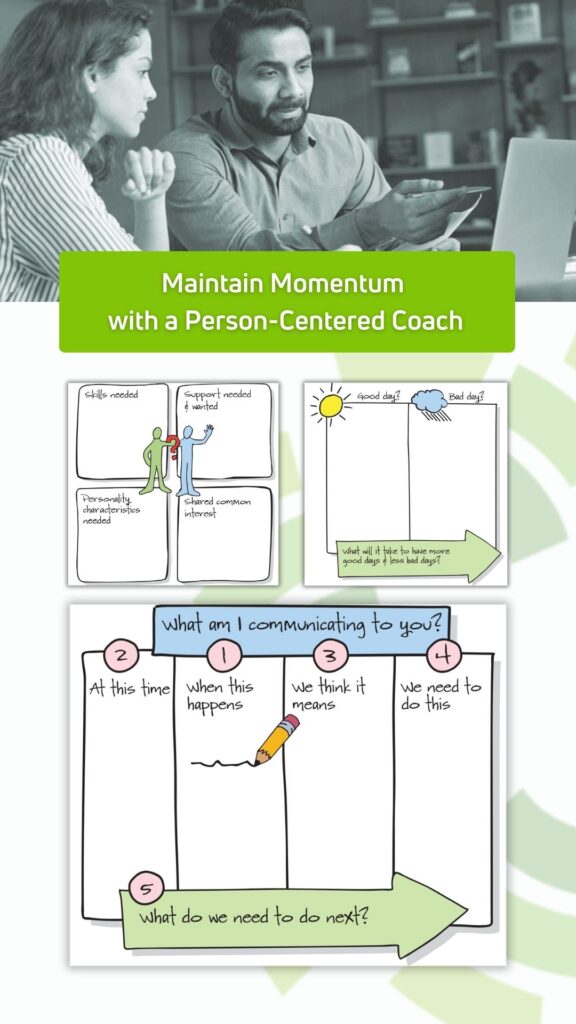
Person-Centered Coaching is an art in that it is an application of creative skill built upon training in specific techniques. Coaching provides the continual push that keeps the person-centered acceleration going, thereby overcoming the often more powerful forces of staff turnover, work distractions, a feeling of not being supported by leadership and general difficulty of supporting folks in community settings.
5 Ways Person-Centered Coaches Keep the Momentum
- Coaches don’t wait for staff to ask for help but take initiative and work alongside staff to maintain a mindset of inclusion, respect, and positive encouragement when supporting people in service.
- Coaches learn how to walk staff through the eleven person-centered skills to ensure valuable information is accurately gathered and not lost when staff changes.
- Coaches are trained to recognize a staff member’s learning style and how to track person-centered skill proficiency through four stages of learning.
- Coaches learn to use stories and other motivational skills to inform and inspire. This framework means the Coach can provide feedback in a way that is most beneficial to the supporter and the person supported.
- Finally, coaches provide subject matter support to organizational leaders to weave person-centeredness into the fabric of their current organization and to ensure new initiatives are consistent with best person-centered practices fulfilling needs such as, “Everyone feels confident and supported within their corporation and workplace.”
Contact us today if you’re interested in training your key staff
on the art of Person-Centered Coaching.