Direct Support Professionals | Dynamic, Selfless, & Passionate

By Hilary Gaytan – Former DSP, QIDP | Business Development Rep. IntellectAbility
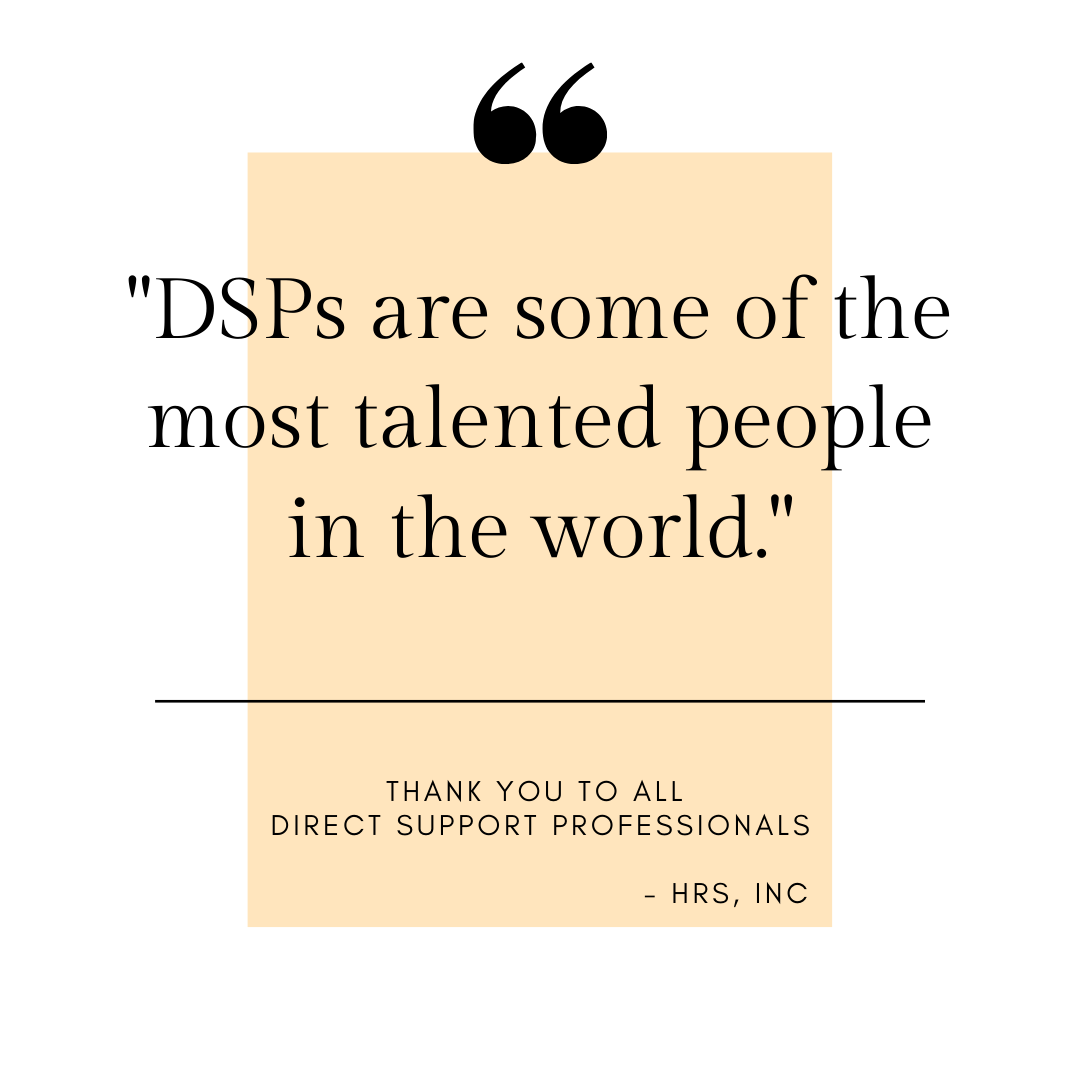
I think you could argue that DSPs are some of the most talented people in the world. (And I say that not just because I used to be one!) What other career requires you to wear as many hats? At any given moment on a shift you may be asked to be a teacher, coach, cook, personal assistant, advocate, stylist, chauffeur, nurse, therapist, tech support specialist, job coach, physical trainer, friend.
 As a DSP, you quickly learn that your job is not just to “show up and follow levels of supervision”. Like any job worth its salt, it has its good days, the not-so-good days, the big leaps and the baby steps.
It’s assisting someone to bake their Grandma’s famous chocolate cake or teaching someone how to use Facetime so they can call their Dad. It’s the late nights spent discussing how to overcome a disagreement with their boyfriend, and the early mornings you spend assisting with medications.
Not to mention the hours of thorough training in the classroom, on the job and continuing education training.
Sacrificing time with your own friends and family by staying late or working holidays, to help someone else’s friend/family member achieve their goals is commonplace in the life of a DSP. The job is nothing short of demanding and at times, is out-right difficult.
Yet… it is the most rewarding job you will probably ever have.
Case in point, I recall watching onward as someone paid for their drink at the movies, entirely on their own after weeks of practice. The look of pure satisfaction as she confidently counted back her change to me. As the previews began, I witnessed the silent tears as she whispered, “I’m just so proud of myself”. What I wouldn’t give to bottle that moment up and take a sip from it every day!
It is moments like that, along with the emotions and the achievements that DSPs the world over work diligently to create every single day.
This week is National DSP Recognition Week, and we at IntellectAbility want you all to know that this week, and every week, we are thankful for and admire the dynamic, selfless, passionate DSPs all over the country who have somehow found a way to rock those innumerable hats while creating a quality of life for those you serve!
As a DSP, you quickly learn that your job is not just to “show up and follow levels of supervision”. Like any job worth its salt, it has its good days, the not-so-good days, the big leaps and the baby steps.
It’s assisting someone to bake their Grandma’s famous chocolate cake or teaching someone how to use Facetime so they can call their Dad. It’s the late nights spent discussing how to overcome a disagreement with their boyfriend, and the early mornings you spend assisting with medications.
Not to mention the hours of thorough training in the classroom, on the job and continuing education training.
Sacrificing time with your own friends and family by staying late or working holidays, to help someone else’s friend/family member achieve their goals is commonplace in the life of a DSP. The job is nothing short of demanding and at times, is out-right difficult.
Yet… it is the most rewarding job you will probably ever have.
Case in point, I recall watching onward as someone paid for their drink at the movies, entirely on their own after weeks of practice. The look of pure satisfaction as she confidently counted back her change to me. As the previews began, I witnessed the silent tears as she whispered, “I’m just so proud of myself”. What I wouldn’t give to bottle that moment up and take a sip from it every day!
It is moments like that, along with the emotions and the achievements that DSPs the world over work diligently to create every single day.
This week is National DSP Recognition Week, and we at IntellectAbility want you all to know that this week, and every week, we are thankful for and admire the dynamic, selfless, passionate DSPs all over the country who have somehow found a way to rock those innumerable hats while creating a quality of life for those you serve!
As a DSP, you quickly learn that your job is not just to “show up and follow levels of supervision”. Like any job worth its salt, it has its good days, the not-so-good days, the big leaps and the baby steps.
It’s assisting someone to bake their Grandma’s famous chocolate cake or teaching someone how to use Facetime so they can call their Dad. It’s the late nights spent discussing how to overcome a disagreement with their boyfriend, and the early mornings you spend assisting with medications.
Not to mention the hours of thorough training in the classroom, on the job and continuing education training.
Sacrificing time with your own friends and family by staying late or working holidays, to help someone else’s friend/family member achieve their goals is commonplace in the life of a DSP. The job is nothing short of demanding and at times, is out-right difficult.
Yet… it is the most rewarding job you will probably ever have.
Case in point, I recall watching onward as someone paid for their drink at the movies, entirely on their own after weeks of practice. The look of pure satisfaction as she confidently counted back her change to me. As the previews began, I witnessed the silent tears as she whispered, “I’m just so proud of myself”. What I wouldn’t give to bottle that moment up and take a sip from it every day!
It is moments like that, along with the emotions and the achievements that DSPs the world over work diligently to create every single day.
This week is National DSP Recognition Week, and we at IntellectAbility want you all to know that this week, and every week, we are thankful for and admire the dynamic, selfless, passionate DSPs all over the country who have somehow found a way to rock those innumerable hats while creating a quality of life for those you serve!