Health Risk Informed Telemedicine and How it Benefits People with IDD

What is Health Risk Informed Telemedicine and How Can it Benefit the People You Support

By Lorene Reagan, Director of Public Relations, IntellectAbility 

Janet is a 50-year-old woman who has a history of urinary tract infections. It’s Saturday afternoon, and she’s complaining of pain with urination and refused to eat her lunch earlier in the day. The group home staff bring her to the emergency room, where she waits for 6 hours to be evaluated and treated, with the same antibiotic she’s received in the past. Janet and her housemates, who’d planned on attending a holiday party that evening, were unable to go because Janet, the house van, and the only other direct support professional on duty were stuck in the emergency room

Sound familiar? This scenario and other similar scenarios play out in group homes every day, even though the availability of telemedicine as an alternative to emergency room visits has expanded significantly over the past few years. Unfortunately, people with intellectual and developmental disabilities (IDD) have historically not had the same access to what many of us now consider routine healthcare supports, including telemedicine. This is particularly concerning since people with IDD tend to have more significant medical needs and poorer health outcomes. And traditionally, they’ve required more emergency care but are more likely than the general population to experience adverse complications or death while hospitalized. According to a 2022 study, people with IDD were 2.7 times more likely to experience harm while hospitalized.

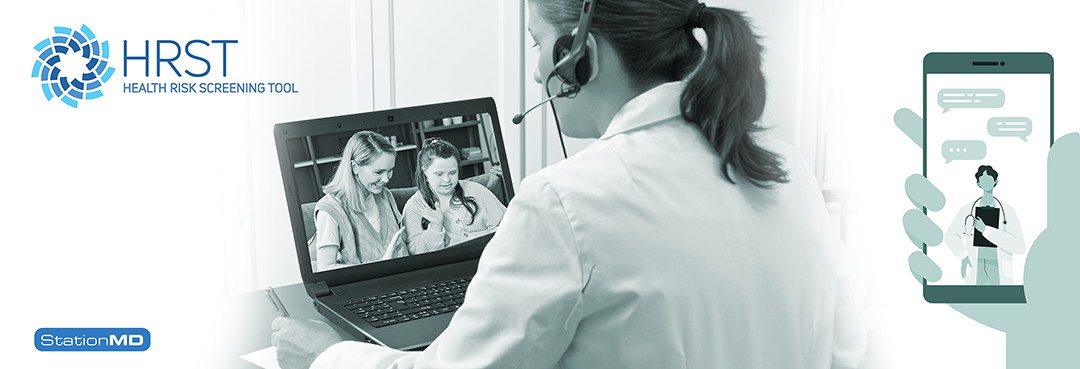
In this condensed webinar recording, learn more about how IntellectAbility, StationMD, and The Missouri Division of Developmental Disabilities facilitate interoperability between the Health Risk Screening Tool and StationMD’s telehealth platform to provide real-time health risk information to telehealth providers.

What can we do to prevent unnecessary emergency room visits and potentially preventable (and risky) hospitalizations for people with IDD? One solution is to ensure people have access to IDD-competent, health-risk-informed telemedicine support.

According to Dr. Maulik Trivedi, Chief Strategy Officer at StationMD, “Health risk informed access to IDD competent telemedicine supports is a game-changer for people with IDD. Our partnership with IntellectAbility starts with educating our physicians using the Curriculum in IDD Healthcare and now includes access to the person’s health risk information using a new interface between the Health Risk Screening Tool (HRST) and the StationMD telemedicine platform.” 

“As telemedicine usage increases, we at IntellectAbility are working to ensure Janet and others with IDD have equitable access to IDD-competent, risk-informed telemedicine. The HRST-StationMD interface is a great starting point for achieving health equity for people with IDD and preventing unnecessary emergency department visits and hospitalizations,” said Dr. Craig Escudé, IntellectAbility President. 

For more information or to request a demonstration of the HRST, please contact us!

Make real-time health risk informed decisions with HRST​
Learn More

Bright, Well-Educated, Strong Work History, But Still Looking for Meaningful Employment

THREE BASIC CONSIDERATIONS FOR MAINTAINING A COMPETENT AND DIVERSE WORKFORCE   |   4 MIN READ

By Lorene Reagan, RN, MS – Dir. of Public Relations, IntellectAbility

In recognition of National Disability Employment Awareness Month, we interviewed Curtis Glover, who holds a Bachelor’s degree in Game Art and Development and is an accomplished graphic artist, public speaker, fundraiser, photographer, disability advocate, and Shaolin Kempo Black Belt. He has a video game collection that dates back to the 1970s and all of the games still work.

Recently Curtis completed an internship at an augmented reality (AR) technology firm and produced over 150 different 3-D models. Others in the internship produced, on average, 20-30 models. His graphic artwork is featured on the T-shirts for Chaos and Kindness, Recycled Percussion’s Emmy-nominated TV show, which focuses on giving back to others and making a difference around the world. Curtis is intelligent, well-educated, easy to talk to, impeccably groomed, and has a strong employment history in retail. Yet he is still struggling to find meaningful employment in his field of study.


Why is this?

It may be because Curtis lives with autism, but he is quick to point out that he describes himself as “living with a different ability.” According to the US Department of Labor, Bureau of Labor Statistics August 2022 News Release, there are 11.2 million job openings in the United States, yet many people with disabilities are still struggling to secure and maintain meaningful employment.

Why is this, and what can be done? 

Many talented and highly qualified people with disabilities continue to be shut out of the workplace because of barriers, including a lack of education and awareness about how best to support people with disabilities in the workplace, outdated ideas about the impact of potential accommodations that might be needed, unfounded concerns about productivity and unconscious disability bias. 

According to Curtis, employers could begin to break these barriers down by starting with three basic considerations for developing and maintaining a competent, diverse, creative, profitable, and committed workforce:

  1. First, consider how screening practices that use artificial intelligence (AI) can negatively impact and inadvertently screen out people with certain disabilities. Curtis has submitted over 80 applications in response to online job postings for which he is qualified and received only two responses.
  2. Next, support employees living with autism by providing kind, respectful, timely, and concrete feedback and, when necessary, recommendations for how they can improve their job performance. This is particularly important because success in the workplace is highly dependent upon what is referred to as “soft skills” and, according to Curtis, “social skills and the ability to ‘read’ people can be hard for people living with autism.”
  3. Finally, Curtis would like employers to simply “get to know me and give me a chance to share my skills.” In his own words, “when I set my mind to something, I focus on it until it is done. I am loyal and will work hard to meet your company’s goals”.

There are literally millions of people like Curtis who live with autism and are actively seeking meaningful employment. If you are an employer looking to hire some great talent, why not reach out during National Disability Employment Awareness Month to explore how people with autism can contribute to your company’s success?

About Curtis Glover

If you’d like to get to know Curtis and learn about how his digital artistry and graphic design skills could benefit your organization, you can find him on LinkedIn, and you can email him at curtisglover99 (at) gmail.com. 

Please, May I Have More Data?

By Lorene Reagan
Director of Public Relations, IntellectAbility

Rate-setting considerations for long-term services and supports for people with intellectual and developmental disabilities.

Most actuaries working in the Medicaid space are well acquainted with the acute care rate-setting process. But many may not be familiar with rate setting for Medicaid long-term support and services (LTSS), Home and community-based services (HCBS) for people with intellectual and developmental disabilities (IDD), or the data sources available to inform the rate-setting process. This article introduces the IDD population, their support needs, the most used HCBS services, and the tools that can be used to inform support needs and the IDD-HCBS rate setting process.

Medicaid is the largest funder of LTSS in the U.S. All 50 states and the District of Columbia provide services funded by one or more Medicaid HCBS Waivers, specifically designed to “waive” the provisions within federal Medicaid regulations that historically only paid for services provided in facilities and institutions. Medicaid LTSS waivers allow people with IDD to live in community settings rather than in institutions, facilitating opportunities for community integration and improved quality of life.

According to data published in 2021 by the Institute on Community Integration, an estimated 7.43 million people with IDD live in the United States, and approximately 17% receive services through state IDD agencies. This group’s estimated Medicaid HCBS waiver expenditures were $42.29 billion in 2018.

Some people with IDD live independently in the community and don’t require formal services or support.
Others need support for daily activities such as dressing, bathing, and eating, and for incidental activities such as shopping, cooking, cleaning, and money management. Supports may also be provided to help a person secure and maintain employment, develop relationships, and participate in hobbies, sports, clubs, or worship. There may also be a need for health-related assistance with medications, ambulation, feeding, and other activities to maintain optimal health and manage health risks unique to people with IDD.

Unlike in the past, people with IDD live primarily in community-based settings, not in institutions or nursing homes. Most share a residence with a related family member; some live in group homes, host homes, or adult foster care settings, while others lease or own their own homes.

Services commonly provided under state Medicaid HCBS waiver programs for people with IDD include case management, residential habilitation, community support, personal care, day habilitation, financial management, job coaching, home and vehicle modifications, and assistive technology. Many waivers include self-direct services through which the person selects, hires, and manages their staff and service budget.

Most state Medicaid programs operate their HCBS program for people with IDD using a traditional state-administered Fee-for-Service payment approach, but this is changing with the advent of managed long-term services and supports (MLTSS) programs which employ capitated rates. Unfortunately, there isn’t much experience in this area; while 22 states operated MLTSS programs in 2019, only 10 included the IDD population.

The rate-setting process for HCBS LTSS services is unique and, unlike the approach used in acute care rate setting, focuses mainly on the amount, level, and type of functional, health-related, social, behavioral health, and personal care supports needed for the person with IDD to live successfully in the community.

Each state Medicaid program utilizes the results of various functional screening and assessment tools and other instruments for non-rate setting activities to determine LTSS service eligibility, evaluate level of care, manage health risk, measure acuity, inform resource allocation, and develop service plans. Some are nationally recognized, valid, and reliable instruments and some are “homegrown” tools, having been developed internally. Others are “hybrid” tools based on standardized instruments which the state has customized to meet its unique needs.

In Fee-for-Service programs, states often “tier” LTSS HCBS services. For example, states may have two levels of case management within their Medicaid waiver. A “basic” level and rate are used for people whose needs are more routine, and an “enhanced” level and rate is allowed for those with complex needs, based on assessment findings. In MLTSS, the results of functional assessments and other related data could inform the risk adjustment component of the capitation payment.

As a non-actuary providing subject matter expertise for Medicaid LTSS HCBS rate-setting activities, I learned from my actuary colleagues the value of identifying multiple relevant, valid, and reliable data sources to inform the rate-setting process.

The following are examples of some of the validated tools currently in use that rate-setting teams should consider informing IDD-specific rate setting activities:

  • HRST—Health Risk Screening Tool: web-based health risk instrument that identifies health risks, that, if not addressed, are associated with preventable morbidity and mortality in people with IDD. Six levels of risk are assigned.
  • SIS-A®—Supports Intensity Scale: Adult Version®: standardized assessment tool designed to measure the pattern and intensity of supports that a person age 16 years and older with IDD requires to be successful in community settings. A numerical Support Needs Index is assigned.
  • ICAP—Inventory for Client and Agency Planning: measures adaptive and maladaptive behaviors and is designed for use from infancy to adulthood. Scores that can determine the level of supervision a person needs are generated.

Rate setting for IDD-HCBS is complex and requires multiple inputs and a rate setting team that understands the needs and priorities of people with IDD. Knowing how to select resources that accurately identify support needs, including those required to promote community inclusion and manage maladaptive behaviors, is vital. In addition, because people with IDD have higher incidences of chronic health conditions, lower life expectancies, and difficulty routinely accessing clinically competent healthcare, health risk-related data plays an important role in determining rates. Before selecting the tools to be used in the rate-setting process, the team should evaluate the validity and reliability of each tool and its fitness for use in the rate-setting process.


Published by American Academy of Actuaries – Contingencies. Click here to view the article.
Employing People with IDD as a Way to Help with the Hiring Crisis

Employing People with IDD as a Way to Help with the Hiring Crisis

In this article, we explore successful strategies for recruiting and retaining people with IDD in the workforce and increasing diversity, equity, and inclusion in the workplace.

According to a March 2022 report[1] from the Bureau of Labor Statistics, the employment–population ratio—the percentage of the population that is employed—for people with a disability was only 19.1 percent in 2021, compared to 63.7 percent for people who do not have a disability. Sadly, the same report showed this rate has remained largely unchanged over the past 10 years. And for people with intellectual/developmental disabilities (IDD), finding and retaining employment can be even more challenging.

Best Buddies,[2] an organization that matches skilled and qualified individuals with businesses seeking enthusiastic and dedicated employees, estimates up to 81% of adults (18+) with developmental disabilities do not have a paid job in the community.

Why is this?
Even in the midst of a hiring crisis, many employers are hesitant to hire people with intellectual or developmental disabilities because of myths and stereotypes including[3]:

  • Concern about negative coworker reactions to hiring a person with IDD
  • Assumptions that it will cost more to hire, train, and maintain employment for people with IDD
  • Beliefs that people with IDD will not be as productive or will be unable to develop the knowledge, skills, and attitudes necessary to complete job tasks
  • Fear of litigation associated with hiring and firing people with IDD
  • Negative stereotypes about people with IDD
  • Concern about negative customer reactions
  • Lack of economic incentives, such as tax credits, for hiring people with IDD

According to recent estimates, the United States has about ten million job openings, yet over 8.4 million unemployed individuals are still looking for work[4]. As business owners lament the challenges related to inadequate staffing and Americans are confronted with longer wait times for services, employing people with IDD is a way to help alleviate the labor shortage and increase the level of diversity, equity, and inclusion in the workplace.

People with IDD are valuable assets to our workforce and can:

  • Improve customer satisfaction results
  • Address recruitment and training costs associated with routinely filling high turnover positions
  • Demonstrate lower absenteeism and sick leave than other employees
  • Promote a more diverse and inclusive workplace and enhance employee morale
  • Foster a culture of corporate responsibility
  • Provide the organization with access to potential federal tax incentives[5] such as the Disabled Access Credit, Barrier Removal Tax Credit, and the Work Opportunity Tax Credit

What can HR managers do to attract and retain employees with IDD?

An article in the New York Law Journal[6] highlights how multinational employers are beginning to recognize the benefits of hiring people whose neurological function and structure are different and who are often described as “neurodiverse.” Companies are embracing this community of people, which includes people with IDD, by developing hiring and retention practices that support applicants and employers. Businesses could consider the following strategies which have been adapted from the article to address the needs of individuals with IDD:

  • Partner with government or nonprofit organizations that support people with IDD to ensure compliance with disability employment regulations, optimize processes for screening and selection of applicants and determine what financial and mentorship supports can be leveraged to promote successful employment of people with IDD
  • Tailor hiring practices to support candidates with IDD who may benefit from a more extended interview in a more casual environment and consider the need, up front, to provide additional training or internships
  • Educate managers and co-workers about how best to support employees with IDD
  • Create social support systems within and among other employees with IDD and develop mentorships led by employees who do not have a disability
  • Support employees’ ongoing career success by communicating key performance evaluation measures and, if necessary, develop a plan for supporting the employee to meet the performance measures
  • Set measurable organizational goals for increasing the number of employees with IDD and expanding the types of roles typically available to employees with IDD
  • Integrate policies, procedures, and processes so that “special” approaches developed for employees with IDD become the norm

Creating and maintaining disability-friendly recruitment and retention practices helps organizations fill vacancies, manage turnover, and increase diversity, equity, and inclusion in the workplace. Employers who develop and maintain disability competent cultures and support employees with IDD to be successful in the workplace will have a strategic advantage in the marketplace.

About the Author: Lorene Reagan, RN, MS is Director of Public Relations at IntellectAbility.  She has 30+ years of experience providing clinical and administrative supports for people with IDD and has held roles including state Bureau Chief for IDD services, Manager of Care Management for a Medicaid Managed Care Plan and Principal in a government human services consulting firm supporting state Medicaid programs across the nation to achieve their policy goals.

[1] US Bureau of Labor Statistics. TED: The Economics Daily. March 1, 2022. https://www.bls.gov/opub/ted/2022/19-1-percent-of-people-with-a-disability-were-employed-in-2021.htm

[2] Best Buddies Jobs Program. Nd. https://www.bestbuddies.org/jobs

[3]Why Employers Don’t Hire People with Disabilities: A Survey of the Literature. CPRF, 3 Feb. 2015. cprf.org/studies/why-employers-dont-hire-people-with-disabilities-a-survey-of-the-literature/

[4] Long, Heather, et al.  Why America Has 8.4 million Unemployed When There Are 10 Million Job Openings. The Washington Post, WP Company, 8 Sept. 2021.

[5]  Internal Revenue Service. Tax Benefits for Businesses Who Have Employees with Disabilities.  https://www.irs.gov/businesses/small-businesses-self-employed/tax-benefits-for-businesses-who-have-employees-with-disabilities

[6] Collins, Erika, Hartzler, Ryan.  Attracting and Retaining Neurodiverse Talent: A Global Perspective. October 29, 2021. https://www.law.com/newyorklawjournal/2021/10/29/attracting-and-retaining-neurodiverse-talent-a-global-perspective/?slreturn=20220203120753

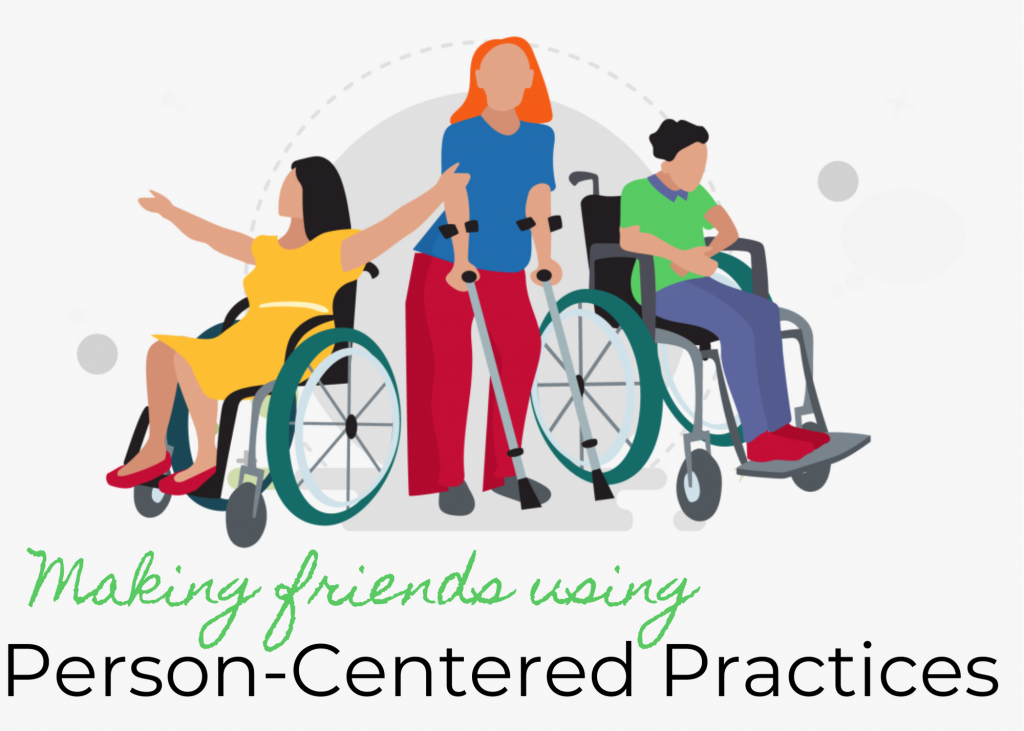
Making Friends Using Person-Centered Practices

By Patrick Lane

One of the best things about being a person is having friends.

Some of us have a lot and others have a few, but we all need friends. Yet so many of the people we support have lives marked with loneliness and isolation. Often anxiety, depression, overreactions, and even health risks are rooted in not having at last one or two good friends.

Along with helping people balance Important To with Important For and using common language instead of “disability-speak”, Person Centeredness is about helping people with disabilities with the essential human need of building friendships. The question that follows seems to be: How do we do that?

There is no textbook answer, but here is a good way to get started: simply list the steps you take in your life to make friends. After all, Person-Centeredness is just “human stuff” broken into smaller pieces so others can know where to help and in a way that is appreciated.

Helping people with disabilities works much the same as how you would like to be helped.

For me, I like to meet people with common interests. Once I’m in a setting with those folks, I may strike up a conversation with someone. If that goes well, I’ll ask for their number. Later I’ll text or call and plan a time to get together with my new friend and possibly others. The friendship may grow or fade, and it’s likely that I’ll connect with others and begin making more friends.

If someone were helping me, they would simply break those steps down and add support where needed. This could be done by arranging transportation, making purchases, helping me understand what is being communicated, or respecting the group’s social norms. That being said, I wouldn’t want the person helping me to take over or make my decisions, and I’d only want help where it’s needed. If we differed on how that someone would help me, we’d keep negotiating until we found a way that worked.

The process of making friends will differ from person to person. Navigating this process will go hand-in-hand with properly gauging where help is needed and how much help to offer. This is worked out with some trial, error, and learning.

You should record what you learn in a Learning Log, so when someone else comes along to help later the same mistakes won’t be repeated. You may find that you don’t know what kind of people they prefer to be friends with. To resolve this, people who support should look at current or past relationships. Refer to their Relationship Map to see what personality traits are shared among those who are close to the person.

If we are willing to try, we can help people with disabilities escape loneliness, and isolation and the negative effects that follow. If we are willing to learn, we really can help make someone’s life better because we helped them make real friends. And after all, one of the best things about being a person is having friends.

Direct Support Professionals | Dynamic, Selfless, & Passionate

dsp yoga photo
  By Hilary Gaytan – Former DSP, QIDP   |   Business Development Rep. IntellectAbility I think you could argue that DSPs are some of the most talented people in the world. (And I say that not just because I used to be one!) What other career requires you to wear as many hats? At any given moment on a shift you may be asked to be a teacher, coach, cook, personal assistant, advocate, stylist, chauffeur, nurse, therapist, tech support specialist, job coach, physical trainer, friend. As a DSP, you quickly learn that your job is not just to “show up and follow levels of supervision”. Like any job worth its salt, it has its good days, the not-so-good days, the big leaps and the baby steps. It’s assisting someone to bake their Grandma’s famous chocolate cake or teaching someone how to use Facetime so they can call their Dad. It’s the late nights spent discussing how to overcome a disagreement with their boyfriend, and the early mornings you spend assisting with medications. Not to mention the hours of thorough training in the classroom, on the job and continuing education training. Sacrificing time with your own friends and family by staying late or working holidays, to help someone else’s friend/family member achieve their goals is commonplace in the life of a DSP. The job is nothing short of demanding and at times, is out-right difficult. Yet… it is the most rewarding job you will probably ever have. Case in point, I recall watching onward as someone paid for their drink at the movies, entirely on their own after weeks of practice. The look of pure satisfaction as she confidently counted back her change to me. As the previews began, I witnessed the silent tears as she whispered, “I’m just so proud of myself”. What I wouldn’t give to bottle that moment up and take a sip from it every day! It is moments like that, along with the emotions and the achievements that DSPs the world over work diligently to create every single day. This week is National DSP Recognition Week, and we at IntellectAbility want you all to know that this week, and every week, we are thankful for and admire the dynamic, selfless, passionate DSPs all over the country who have somehow found a way to rock those innumerable hats while creating a quality of life for those you serve!
Protective Equipment and Persons with IDD

Although people might be getting a little weary of hearing about the COVID-19 pandemic, it is still a very real issue and we need to remain highly vigilant. That includes wearing protective equipment when appropriate. When should masks be worn and how do you safely put them on and off? The World Health Organization (WHO) offers simplistic and helpful demonstrations and explanations regarding masks.

It is difficult for many people to wear these articles. If a person wears glasses and the mask is not put on appropriately, it steams them up. Or, the mask slips down on the face and it must be retied or adjusted. It could just feel very odd so that people are constantly trying to adjust it for comfort. Maybe the person is claustrophobic and has a feeling of suffocation if they can’t breathe in fresh air. What if the person with I/DD is fabric-sensitive, smell or touch sensitive? What if they are simply noncompliant? These are challenges that support persons are dealing with every day.

Here are a few things you can try:

1) Try putting masks on stuffed animals. Let the person put the mask on the toy and then apply their own mask or allow staff to apply it. The support person may have to put it on the stuffed animal. Leave it on the animal for a while so that they can see it isn’t bothered by wearing a mask. It may take several times of putting the mask on the stuffed animal before the person will allow a support person to put a mask on their face or put the mask on their own face.

2) If fabric masks are being used, have several pieces of fabric options and allow the person to choose what they want. Try to have different textures, colors and prints available. Select elastic that is not too tight so that it won’t hurt their ears. If elastic is not available, use large hair ties. The fluffy hair ties that are elastic may be used, too. Try masks with no elastic but instead have simple ties that go around the head. Again, allow them to select the elastic or ties.

3) Let them have a mask to carry around and hold and feel. Let the person try it on and take it off. It doesn’t matter if they destroy it, give them another type to play with and see if there is more success with it. Slowly try to desensitize. Let them wear a mask for ten seconds, then take it off. You may even have to start with a shorter time and add a second or two each time you put the mask on them. You can even make an activity out of it. “Mask time” is when everyone can demonstrate putting on and taking off a mask appropriately. You may try a reward system after they wear the mask for a while such as picking a special treat, a trip to the park, FaceTiming with family (make sure they have the mask on and give the person a lot of praise) or simply spending 1:1 time with their favorite staff.

4) Let them personalize their mask. Again, allow them to select the fabric. If using disposable masks give them a Sharpie® and let them draw on the mask and make it theirs. Provide different stencils that the support persons can help them with, such as cars, butterflies or action figures. Find pictures in magazines and hot glue to the mask. (Be very careful if you are using a hot glue gun near the person! Not only the glue gun, but the hot glue itself can burn the person.) Allow them to make two masks so they can choose which one to wear. This can also be done on a fabric mask, but if drawing, they are stuck with only one or two drawings.

5) The support person can also go to a party supply store, or again use a stencil, and get some crazy big glasses. Hot glue the mask to the glasses making sure the glasses won’t interfere with the fit. This can be done with cloth or disposable masks. If the glasses interfere too much with the fit, make some using a stencil and heavy construction paper. The person can select how they want their glasses to look and again they personalize with drawings or pictures. Be mindful the the glasses do not obscure the person’s vision.

6) The staff can have a “Western” time. Everyone puts on a cowboy hat and has a bandana. Watch old Westerns where many of the characters wear a bandana mask. Allow the person to try a simple bandana mask. This is much better than wearing nothing. (I would suggest you avoid The Lone Ranger TV series, because the main character only wears a mask that covers the eyes and obviously that would not be effective against COVID-19.)

Suggested Old Western Series:
a. Bonanza
b. Roy Rogers
c. Gunsmoke
d. Hop Along Cassidy
e. The Rifleman
f. Wagon Train
g. Maverick

The shows can often be found on ME TV or H and I TV channels. If you find some that are appropriate, DVR them and you will always have something to watch.

I hope this gives you some suggestions that might not have been tried. Even if all the people in support have no problem with masks, most of these suggestions can still be used to personalize their masks. All any of us can do is hope this nasty virus leaves us soon!

By Sherry Neal, RN-BC, CDDN