- NADSP Accredited
online Course
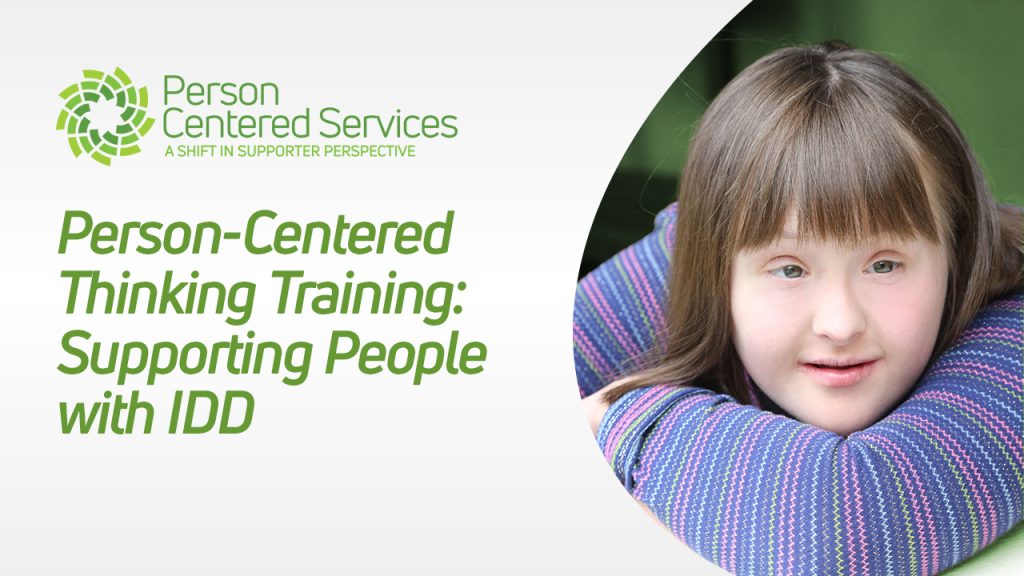
Person-Centered Thinking Training: Supporting People with IDD
The Learning Community for Person-Centered Practices (TLCPCP) full curriculum, developed in partnership with Support Development Associates (SDA)
Course Description:
This 17-module, self-paced course equips frontline supporters with the Person-Centered Thinking (PCT) skills they need to deliver respectful, dignified support to people with intellectual and developmental disabilities (IDD)— honoring who each person is while supporting their health and well-being.
Drawing on a comprehensive suite of PCT skills, this training guides learners through the full arc of person-centered support: from building trust through deep listening and discovery, to learning sets of skills and techniques like uncovering Rituals and Routines, Relationship Mapping, decoding behavior as communication, and creating living Person-Centered Descriptions that reflect each person’s unique voice and support framework. Through engaging videos, interactive activities, and real-world scenarios, supporters gain practical skills they can apply immediately to protect what matters most to the people they support and adapt thoughtfully as needs evolve.
Best for: All levels of Direct Support Professionals (DSPs), Case Managers, Residential/House Managers, provider administrators, and anyone providing support to people with intellectual and developmental disabilities in home or community-based settings.
Highlights
- Category: Person-Centered Thinking
- Runtime: 9 Hours, 10 Minutes
- Format: Self-paced, online eLearning
What You’ll Learn
Learn how to:
By completing this course, learners will be able to:
- Build meaningful connections
- Identify what matters to and for each person
- Understand behavior as communication
- Develop practical, person-centered plans
Synopsis by Module
The “Understanding the Core Concept” module introduces the foundational principle of Person-Centered Thinking by teaching support professionals how to carefully balance what is important to a person for their joy and comfort with what is important for their health and safety. Through interactive scenarios and Discovery skills such as Like and Admire, learners explore how to foster positive control, shift from Power Over to Power With dynamics, and evaluate the impact of different support environments. Ultimately, participants will apply these insights to build a practical One-Page Description, equipping them to tailor their daily care to each person‘s unique preferences and needs.
The “Person-Centered Discovery Skills” module emphasizes that discovery is an ongoing, empathetic process of learning what brings joy, comfort, and meaning to a person‘s life, rather than a mere administrative checklist. Learners practice intentional listening and employ specific conversational processes, such as the seven questions and the ask about the ask technique, to uncover the deeper motivations and values behind a person’s requests. By recognizing diverse communication styles and building trust, support professionals can gather these insights to construct a meaningful Person-Centered Description that ensures daily care is truly driven by the person’s specific preferences.
The “Rituals and Routines” module explores how daily patterns—both functional routines and emotionally significant rituals—are crucial for a person’s sense of identity, comfort, and positive control. Learners discover how to identify these patterns through observation and curious conversations, recognizing that disruptions, especially during transitions, can cause significant anxiety and frustration. By respectfully documenting these daily, cultural, and seasonal rhythms in a One-Page Description, support teams can ensure consistent care that honors what is truly important to the person.
The “Good Day/Bad Day” module teaches support professionals how to analyze the rhythm of a person’s daily life to uncover their true values, preferences, and needs. By closely observing transitions, environmental factors, and reactions to routine disruptions, learners practice identifying what brings comfort versus what causes stress, especially for those who use alternative communication methods. Ultimately, participants learn how to document these critical daily patterns in a One-Page Description, ensuring that support teams can intentionally protect what works and respectfully adapt their approaches to nurture more good days.
The “Relationship Mapping” module teaches support professionals how to visually diagram a person’s social world to better understand the emotional closeness and diverse roles of the people in their life. By distinguishing between paid and unpaid relationships, learners can identify critical gaps, recognize risks of social isolation, and discover opportunities to build stronger natural supports. Support teams will learn to maintain a living Relationship Map that helps them proactively guide planning conversations and ensure that care strategies honor and nurture people’s vital human connections.
The “Communication Chart” module reframes behavior as a vital form of communication, particularly for people who do not use words to express themselves. Learners are taught to use a four-part collaborative skill to objectively observe an action (“I do this”), analyze its environment (“What is the context”), empathetically explore its underlying message (“It usually means”), and determine the person’s preferred supportive response (“And I want you to”). By shifting the focus from simply managing or stopping behaviors to truly understanding them, support teams can create consistent, safe environments that build trust and honor the person‘s voice.
The “Two-Minute Drill” module introduces a quick, structured conversation skill designed to help support professionals uncover what truly matters to the person when time is limited. By practicing two minutes of uninterrupted, focused listening followed by thoughtful reflection, learners can effectively identify a person’s core values and immediate support needs. Combined with the guess, ask, write discovery process, this intentional approach to conversation builds trust, improves daily planning, and ensures that care remains deeply aligned with the person’s own voice.
The “Reframing Reputations” module teaches support professionals how to look beyond limiting labels and “mild negative” traits—such as being called “stubborn” or “clingy”—to uncover the underlying values and needs those traits represent. By applying three specific reframing questions, learners practice shifting their perspective from judgment to empathy, discovering how a perceived challenge might actually be a strength or a plea for specific support. This skill empowers teams to rewrite negative narratives, ensuring that planning conversations and documentation reflect the whole person and foster more respectful, inclusive care.
The “Everyday Learning Skills” module emphasizes that learning in person-centered support is a continuous, natural process of observation and reflection rather than a formal, scheduled event. Learners are introduced to three collaborative approaches—the Learning Log, 4+1 Questions, and Working/Not Working—that help teams capture daily insights, creatively solve problems, and center a person‘s lived experience. By actively documenting and sharing these observations, support professionals can build a culture of continuous improvement, ensuring that even small discoveries lead to more consistent, responsive, and meaningful care.
The “Learning Log” module introduces a straightforward documentation skill that helps support professionals organize their everyday observations into a consistent Notice, Reflect, Act framework. By actively recording what works well and what doesn’t during daily activities, teams can uncover valuable patterns regarding a person‘s preferences, comfort levels, and support needs. Ultimately, using the Learning Log transforms these reflective insights into intentional, responsive actions, which prevents the team from repeating mistakes and ensures the person feels truly seen and respected.
The “4+1 Questions” module introduces a structured reflection framework designed to help support teams systematically evaluate past actions and creatively solve problems when they feel stuck. By guiding teams through a continuous loop of asking what has been tried, what has been learned, what is pleasing, and what is concerning, the skill ensures that insights are clearly articulated before deciding on the “+1” question: “What should we do next?” This cyclical process transforms reflection into actionable, person-centered strategies, fostering a dynamic culture of shared learning and continuous improvement.
The “Working/Not Working” module introduces a powerful Discovery skill used to organize multiple perspectives when support teams feel stuck or face disagreements. By gathering input from the person, their family, and professionals, learners create a clear visual that contrasts what is currently effective with what causes friction or stress. This structured approach helps teams move beyond surface-level fixes and winner-loser perspectives to negotiate support strategies that work for everyone involved.
The “Management Skills” module focuses on providing support professionals with skills to clarify their roles, preventing the unintended harm that occurs when boundaries are blurred, and autonomy is undermined. Learners are introduced to two key skills: Matching Profiles, which ensures compatibility between a supporter’s style and a person’s preferences, and the Donut Sort, a visual framework that categorizes tasks into core responsibilities, areas for creative judgment, and tasks outside one’s role. By regularly revisiting these skills, teams can reduce conflict, promote consistency, and deliver intentional, respectful care without overstepping.
The “Matching Profiles” module teaches support professionals how to create detailed profiles that align a person’s unique preferences, personality traits, and support needs with the right staff members. By collaboratively identifying specific “Supports Needed,” “Skills Required,” “Personality Characteristics,” and “Nice to Have” shared interests , teams can prevent the stress and harm caused by mismatched support. Ultimately, utilizing these profiles for hiring and team assignments ensures that people receive consistent, intentional care in an environment where they feel safe, respected, and empowered.
The “Donut Sort” module introduces a visual framework that helps support teams clarify their roles by categorizing tasks into core responsibilities (the hole), areas requiring judgment and creativity (the donut), and boundaries that are not their responsibility (outside the donut). By gathering insights through observation and open conversations, professionals can collaboratively define these expectations to prevent burnout, avoid unintentional harm, and foster safe, flexible support. Ultimately, treating the Donut Sort as a living document that evolves with the person ensures consistent care that actively protects their autonomy and empowers them to make their own choices.
The “Building a Person-Centered Description” module teaches support professionals how to integrate their Discovery skills into a comprehensive, living Person-Centered Description that captures a person‘s unique voice, values, and support needs. Emphasizing usability over perfection, learners discover how to write clear, jargon-free documents that strike a balance between the person’s Important To and Important For, clearly defining supporter roles to prevent over- or under-supporting. Teams are encouraged to actively use and regularly update this description in everyday routines to help the person maintain positive control and give respectful, tailored care.
The “Course Wrap-Up” module invites support professionals to reflect on the comprehensive person-centered skills and practices they have learned to meaningfully support people with IDD. It emphasizes that true Person-Centered Thinking shifts the focus from rigid systems to relationship-building by carefully balancing what is important to a person with what is important for their health and safety. By committing to ongoing discovery, intentional listening, and regular reflection using the skills acquired in this course, learners are empowered to build deep trust, support autonomy, and drive lasting cultural change in their everyday practice.
About the Curriculum
The Learning Community for Person-Centered Practices (TLCPCP) is a collaborative of agencies, companies, states, and individuals who have come together to ensure best practices in Person-Centered Practices as well as resources such as curriculum, education, conferences, group discussions, and celebration.
IntellectAbility has partnered with TLCPCP to provide tools and training that empower, educate, and inform those responsible for protecting, maintaining, and restoring health, wholeness, and good quality of life.
For a more detailed look at the curriculum, please contact us below!