IDD Perspectives: Reproductive Health for Women with IDD: Breaking Barriers to Preventive Healthcare
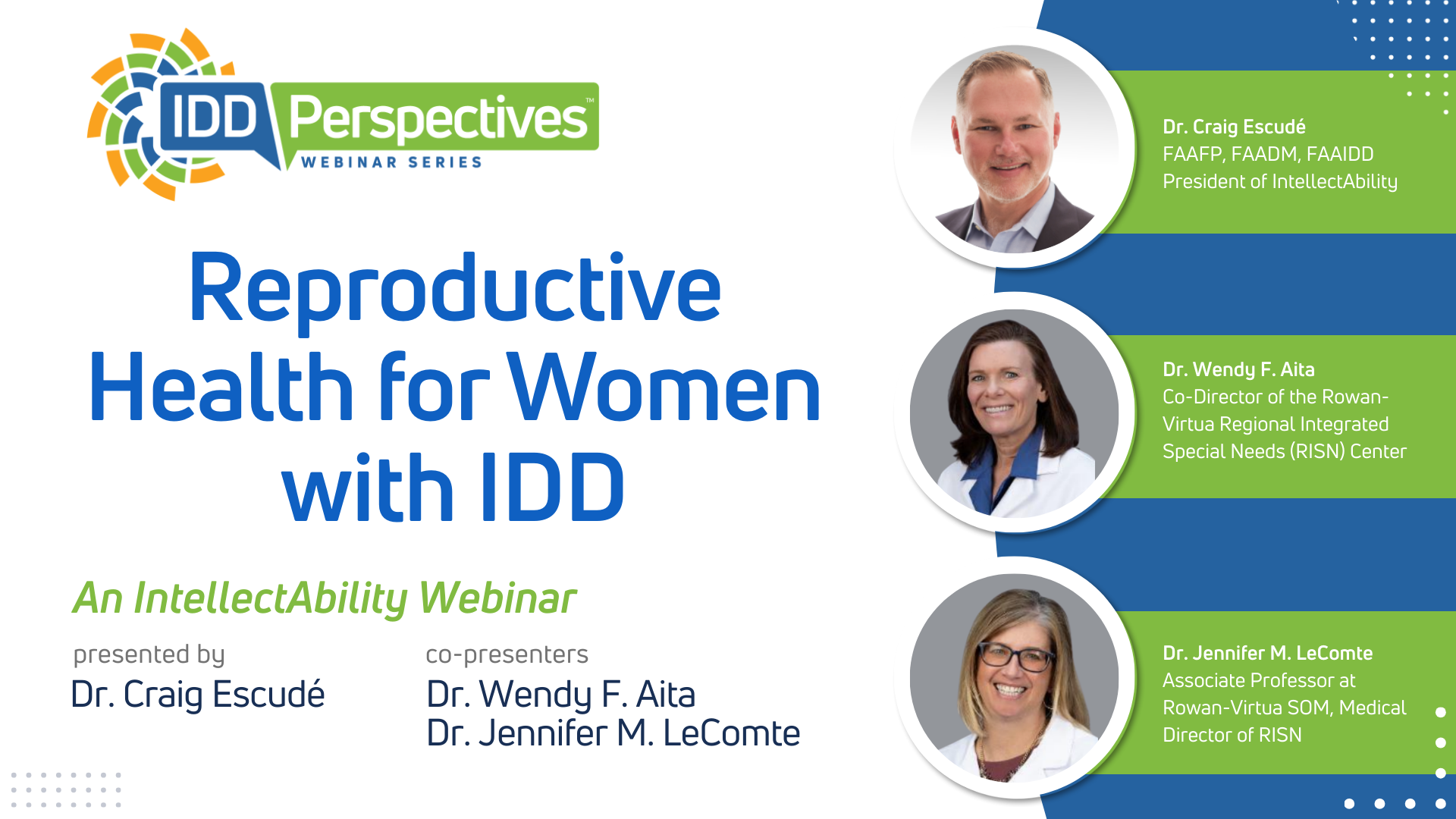
For too long, reproductive and preventive healthcare for women with intellectual and developmental disabilities (IDD) has been overlooked, misunderstood, or delayed until a crisis occurs. In the IDD Perspectives webinar, Reproductive Health for Women with IDD, a panel of experts addressed this gap and outlined practical, person-centered solutions.
Hosted by Dr. Craig Escudé, FAAFP, FAADM, FAAIDD, President of IntellectAbility, the session featured Dr. Jennifer LeComte and Dr. Wendy Aita, leaders in inclusive healthcare and trauma-informed practice. Together, they explored how providers, supporters, and systems can improve access to reproductive health services for people with IDD, who often face significant barriers and systemic challenges in accessing both reproductive and mental health care.
The discussion emphasized the importance of equitable access to reproductive health services for people with disabilities, highlighting that fair and unbiased availability is fundamental to achieving reproductive justice and autonomy. The need for equitable reproductive health care for women with IDD was underscored, recognizing the systemic disparities they face.
The panel also stressed the importance of disability inclusion in reproductive health discussions and systems to ensure all people are considered in support planning. Their message focused on improving access to reproductive health services for people with IDD, addressing the removal of barriers and promoting inclusivity.
Their message was clear: preventive reproductive health care for women with IDD is essential!
Why Preventive Sexual and Reproductive Health Care Matters for People with IDD
Routine screenings such as Pap smears, mammograms, HPV testing, and clinical breast exams save lives. Yet many women with IDD never receive these services on schedule or even at all.
Dr. LeComte emphasized that too often, people with IDD are pushed toward emergency health care or sedation instead of receiving routine, person-centered preventive services. This approach leads to higher rates of avoidable complications and delayed diagnosis of treatable conditions. Identifying risk factors during preventive visits is essential for early detection and effective intervention. This can lead to increased morbidity, mortality, and more healthcare trauma.
Dr. Escudé noted that the outdated belief that people with IDD “don’t live long enough” to need preventive health care is both inaccurate and harmful. People with IDD are living longer, fuller lives, and they deserve the same standard of healthcare as everyone else. This includes a focus on preventative healthcare.
Providing adequate time during appointments is crucial to ensure women with IDD receive comprehensive, respectful, and accessible reproductive health care.
Understanding Health Disparities in Women with IDD
Women and girls with IDD face compounded health disparities related to gender, disability, and access to healthcare. Compared to other women, women with IDD often experience greater challenges in achieving equitable reproductive health outcomes. These disparities are especially visible in reproductive health. Women with IDD are more likely to report fair or poor health compared to other women, underscoring the need for targeted healthcare and support services.
Dr. Aita highlighted that women with disabilities, including those with cerebral palsy, experience significantly higher mortality rates from breast and cervical cancer. Women with chronic physical disabilities, such as difficulty walking, also face unique health challenges and require tailored healthcare and support services. This is largely because they are not screened regularly.
Barriers to screening mean that conditions that could be detected early often go unnoticed until they become life-threatening. Chronic conditions and functional limitations can further complicate access to preventive healthcare. Preventive healthcare reduces suffering, saves resources, and improves long-term outcomes, but only if people can access it.
Drs. Escudé, LeComte, and Aita discussed the barriers that many people with IDD experience when trying to access preventative and reproductive healthcare.
Patient-Level Barriers: Fear, Trauma, and Lack of Information
Many women with IDD face significant personal barriers when seeking reproductive healthcare.
These include fear of unfamiliar procedures, anxiety about physical touch, and even previous medical or sexual trauma. A lack of understanding of what will happen at the appointment and communication challenges or barriers may also become a barrier to many women accessing reproductive healthcare as well.
Accessible reproductive health information is essential for women with IDD, as limited access to such information can further restrict their ability to make informed decisions and exercise their rights to health and wellness. The disabilities experience, encompassing the unique challenges and barriers women with intellectual and developmental disabilities face in healthcare, reproductive rights, and social participation, shapes how they interact with the healthcare system and influences their health outcomes.
Because reproductive exams involve private parts of the body, they can feel overwhelming, especially for people who have been taught that these areas should never be touched. Additionally, some women with IDD may have experienced sexual violence, which can further complicate their access to healthcare or support.
Dr. Aita stressed that people must be given time, preparation, and permission to move at their own pace. Preventive healthcare should never feel rushed or forced.
Supporter-Level Barriers: When Good Intentions Create Obstacles
Supporters, family members, and staff play a vital role in healthcare access. But sometimes, well-meaning supporters unintentionally become barriers.
Common challenges include:
- Believing the person is “not sexual” — when in fact, women with IDD are sexual beings with the same reproductive rights and needs as others
- Avoiding conversations about sexuality
- Discouraging private medical discussions
- Remaining in exam rooms during sensitive visits
- Assuming exams are too traumatic
Research shows that many people with mild or moderate IDD are sexually active. Ignoring this reality increases health risks and limits autonomy.
One key recommendation from the webinar was ensuring that people with IDD have private time with their healthcare providers. Confidential conversations help identify concerns, prevent abuse, and build trust.
Provider-Level Barriers: Gaps in Medical Training
Healthcare providers often lack formal training in caring for people with IDD, especially in sensitive areas like reproductive health and sexual health. Medical providers play a critical role in ensuring that reproductive healthcare is accessible, inclusive, and non-discriminatory for people with disabilities.
Dr. LeComte explained that many medical schools and residency programs provide limited exposure to disability-focused healthcare. As a result:
- Providers may feel unprepared
- Negative attitudes among providers, such as misconceptions and biases, can impact the quality of reproductive healthcare for women with IDD
- Assumptions replace individualized healthcare or support
- Preventive screenings are deprioritized
- Patient priorities are overlooked
Addressing sexual health as part of comprehensive healthcare is crucial to ensure that women with IDD receive the information and support they need.
Without asking “What matters to you?” providers may focus only on medical diagnoses while ignoring relationships, sexuality, and quality of life.
Inclusive education and clinical exposure are essential to closing this gap.
System-Level Barriers: When Access Isn’t Accessible
Even when patients and providers are motivated, system barriers can prevent healthcare or support.
These include:
- Inaccessible buildings
- Lack of accessible equipment, such as height-adjustable examination tables, which are essential for equitable healthcare
- Limited wheelchair-accessible mammography due to insufficient accessible equipment
- Inadequate lifting equipment
- Insurance restrictions
- Medicaid coverage limits across state lines
It is crucial that healthcare facilities are physically accessible and equipped with accessible equipment to support women with IDD in receiving comprehensive reproductive healthcare.
These issues significantly impact healthcare access for women with intellectual and developmental disabilities (IDD), making it difficult for them to obtain comprehensive and equitable reproductive health services.
Dr. LeComte shared that some patients have never received a full physical exam simply because systems were not designed to accommodate them.
These structural barriers increase anxiety, discourage follow-up healthcare, and reinforce health disparities, which can further limit access to reproductive health services.
Person-Centered Solutions: Preparing, Empowering, and Supporting
Despite these challenges, the webinar highlighted powerful strategies that improve access and outcomes.
An essential aspect of person-centered reproductive health is supporting individualized menstrual management options for women with intellectual and developmental disabilities (IDD). Patient-centered healthcare is especially important in reproductive health for women with IDD, as it ensures services are accessible, respectful, and tailored to each person’s needs and preferences. This includes ensuring access to information and choices about menstrual suppression, contraception, and other options, while respecting autonomy and personal preferences, including reproductive autonomy and access to family planning options and family planning services as a key component of reproductive healthcare.
- Education and Self-Advocacy
The RISN Center team developed accessible materials to help women understand their bodies and their rights. These include:
- Plain-language guides
- Visual tools
- Demonstration models
- Step-by-step explanations
Providing accessible education and advocacy tools is especially important for people of reproductive age with IDD, as they face unique barriers to reproductive healthcare and need support to make informed decisions.
Patients learn what will happen, why it matters, and how to advocate for themselves.
- Pap Camp: Preparing for Success
One innovative program discussed was Pap Camp, a supportive, hands-on preparation experience.
Participants:
- Practice using medical models
- Learn what exam tools look and sound like
- Create personalized comfort plans
- Establish stop signals
- Learn relaxation strategies
This preparation significantly increases screening completion and reduces the need for sedation. Similar preparation strategies can also help improve access to prenatal healthcare for women with intellectual and developmental disabilities by reducing barriers and supporting positive healthcare experiences.
- Trauma-Informed, Sensory-Sensitive HealthCare
Providers are encouraged to adapt exams based on individual needs, such as:
- Dimmed lighting
- Weighted blankets
- Clear verbal explanations
- Preferred support persons
- Breaks during exams
These adjustments help patients feel safe and respected.
- Coordinated Health Care During Sedation
When sedation is necessary for other procedures (such as dental work), providers can coordinate screenings at the same time. This minimizes repeated trauma and reduces healthcare burden.
New Opportunities: HPV Self-Collection
A promising development discussed was HPV self-collection testing.
This method allows patients to collect samples using a simple swab, often without a speculum exam.
Screening for sexually transmitted infections is also a critical component of comprehensive reproductive healthcare for women with intellectual and developmental disabilities (IDD), ensuring that prevention, testing, and treatment are accessible and inclusive.
Benefits include:
- Increased comfort
- Greater autonomy
- Reduced anxiety
- Better access for people with physical disabilities
Increased autonomy in screening can also support informed decision-making about birth control for women with IDD.
While insurance coverage is still expanding, this approach may dramatically improve screening rates in the coming years.
National Progress: Growing Institutional Support
The American College of Obstetricians and Gynecologists (ACOG) has begun prioritizing disability-focused training in residency programs. These programs are increasingly addressing disabilities related health considerations in reproductive healthcare. Given that reproductive health needs affect a significant portion of the total US population, this shift signals growing recognition that inclusive healthcare is a professional responsibility.
The panel expressed hope that other national organizations will follow, helping reduce ableism and improve quality across healthcare systems.
Putting People First in Reproductive Healthcare
Throughout the webinar, one theme remained constant: people with IDD must be at the center of their healthcare and support.
That means:
- Listening to their voices
- Respecting their boundaries
- Preparing them thoroughly
- Including them in decisions
- Recognizing their full humanity
- Acknowledging intersecting identities—such as race, class, and sexuality—and how these impact reproductive health experiences and access for women with IDD
- Supporting their individual choices regarding family growth, including reproductive autonomy and access to family planning options
Preventive reproductive healthcare is not just about tests and screenings. It is about dignity, safety, autonomy, and equity.
Supporting Inclusive Healthcare Through Education
Dr. Escudé closed by encouraging clinicians and organizations to continue building their capacity through training and person-centered practices, including:
- The Curriculum in IDD Healthcare
- Person-Centered Thinking training
- Ongoing professional development
Education and training are especially vital for advancing women’s health for women with IDD, highlighting women’s health as a key area for inclusive and equitable reproductive healthcare that addresses the unique barriers faced by this population.
These tools help ensure that healthcare systems serve people with IDD not as exceptions, but as valued patients.
Final Thoughts
Reproductive health for women with IDD is a public health priority. When barriers are removed and person-centered strategies are implemented, lives are improved and saved.
As this IDD Perspectives webinar demonstrated, meaningful change happens when clinicians, supporters, and systems work together to ensure that no one is left behind.
Additional Resources
- Watch the full IDD Perspectives Reproductive Health for Women with IDD webinar, and explore our full IDD Perspectives webinar series
- Learn more about the Curriculum in IDD Healthcare eLearn or download the brochure here.
- Discover the RISN Center.
- Browse IntellecAbility’s library of free resources, blogs, and our product Knowledge Hub.
- Listen to more in-depth conversations between Dr. Craig Escudé and IDD health experts through the IDD Health Matters podcast.