Unlocking Support: A First-of-Its-Kind Free Course on Substance Use Disorder and IDD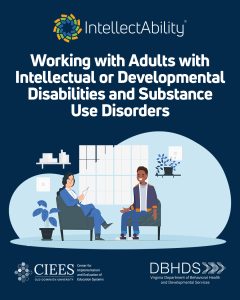
For years, supporters, clinicians, families, and service systems have struggled with a gap no one could ignore: a lack of training that speaks directly to how substance-use disorders (SUD) affect people with intellectual and developmental disabilities (IDD).
Compared to the general population, people with IDD have lower rates of illicit drug use, but the risk of substance-related problems remains significant for those who do use.
While research, advocacy, and clinical experience have all pointed to the need for tailored education, research suggests there has never been a structured pathway to help providers understand how SUD presents differently in people with IDD, and how to support them in ways that honor dignity, safety, and person-centered practice.
That changes today.
A new free course developed by the Center for Implementation and Evaluation of Education Systems (CIEES) and the Virginia Department of Behavioral Health and Developmental Services—with IntellectAbility proudly serving as source experts—is the first training of its kind in the nation dedicated entirely to the intersection of IDD and substance-use disorders.
This project gives supporters something they have never had before: accessible, evidence-informed, person-centered guidance explicitly designed for adults with IDD who may be experiencing or are at risk of experiencing substance abuse disorder. People with IDD who do use substances are at elevated risk for problematic outcomes. And because the full course is entirely free, agencies, case managers, DSPs, clinicians, and families can benefit immediately without cost barriers.
Why Substance-Use Education for Intellectual and Developmental Disabilities (IDD) Supports Has Been Missing
What makes this series so groundbreaking is not just its topic but its depth. The issue of substance abuse among people with IDD has not been widely recognized, leading to significant gaps in prevention education and treatment engagement. The unique challenges at the intersection of IDD and substance abuse require specialized approaches that address both cognitive and behavioral complexities.
Historically, the intersection of IDD and SUD has been overlooked, often because symptoms can present differently, risk factors may be misunderstood, and many training programs lack content specifically tailored to people with IDD. Substance abusers with IDD face specific barriers to recognition and treatment, including misdiagnosis and limited access to appropriate resources. Addressing IDD and substance abuse presents unique challenges due to these misunderstood risk factors and the need for adapted intervention strategies.
Supporters, those closest to the person, have long expressed uncertainty about how to identify substance abuse disorder in a way that respects autonomy while protecting health and safety. Substance abuse problems in this population are often overlooked due to cognitive and behavioral challenges, making early identification and intervention even more critical. This course fills that long-standing gap by creating a shared foundation of knowledge that is both clinically sound and accessible.
Inside the Course: What Learners Will Discover
The course begins by grounding learners in the fundamentals: What substance-use disorders are, how they manifest, and why standard approaches to treatment and recognition may not adequately reflect the experiences of people with IDD. The course also examines the clinical characteristics of substance use disorders in people with IDD, including cognitive, adaptive, and behavioral traits that influence diagnosis and intervention. Exposure to substances can lead to patterns of addictive behaviors in people with IDD, making it crucial to understand the unique challenges they face.
From there, the modules examine how substance abuse disorder affects the person’s life as a whole, including relationships, social roles, identity, and long-term health outcomes. Learners will explore various substance abuse disorders and their impact on people with IDD, with particular attention to the prevalence and impact of drug use and alcohol abuse in this population. Research often focuses on certain substances, such as alcohol and cocaine, when examining substance use among people with IDD. The progression of the modules is purposeful, allowing each concept to build upon the last, so that supporters gain a comprehensive and nuanced understanding of SUD within the IDD population, including different treatment options tailored for this group.
How Trauma, Stigma, and Bias Affect SUD in People with Intellectual and Developmental Disabilities
A powerful component of the course is its honest reflection on trauma, stigma, and systemic bias. Many people with IDD also experience co-occurring mental illness, which can complicate diagnosis and treatment.
Many people with IDD have experienced histories of trauma, social exclusion, or learned helplessness, all of which can increase vulnerability. Additionally, stigma, both around disability and substance use, can prevent people from accessing appropriate treatment or even being recognized as needing help. Addressing both abuse and mental health issues in this population presents unique challenges that require specialized understanding.
The course addresses these issues directly, providing supporters with the language and insight they need to navigate these realities without reinforcing harmful assumptions. It emphasizes the need for tailored interventions that address substance abuse and mental health together, recognizing the complexity of dual diagnosis in people with IDD.
Recognizing Substance-Use Warning Signs in Adults with Intellectual and Developmental Disabilities
Later modules focus on identifying early warning signs and behavioral changes that may indicate substance use. Deficits in communication skills can make it challenging for supporters to recognize these warning signs, as people may struggle to clearly express their needs or concerns. Additionally, a family history of substance use disorder can increase vulnerability in people with IDD.
Because communication styles vary, and because many people with IDD express distress through changes in routine or behavior rather than words, this section is especially valuable. Individuals with mild intellectual disability may be at greater risk for substance use problems due to increased independence, social interaction, and exposure to social pressures. Limited communication skills may prevent individuals from expressing distress verbally, making it harder to identify when something is wrong.
Additionally, impairments in adaptive functioning and the presence of cognitive disabilities can further complicate the identification of substance use warning signs, as these factors may mask or mimic symptoms. The high prevalence of mental health disorders and psychiatric conditions among people with IDD can also complicate the identification of substance use warning signs, as symptoms may overlap or be misattributed. It helps supporters distinguish between typical behavior changes, mental health struggles, and signs that substance use may be occurring, offering clarity where many have previously felt uncertain or overwhelmed.
What Supporters, Case Managers, and Care Teams Can Do
Equally important, the course explains what supporters can actually do. Accessible treatment services, including specialized SUD treatment and substance abuse treatment tailored to people with intellectual and developmental disabilities, are critical for ensuring equitable opportunities to address substance use challenges and improve overall wellness.
Instead of only outlining symptoms, the modules provide a compassionate and practical toolkit for walking alongside someone with IDD who is navigating substance-use challenges or returning to use. It offers guidance on communicating respectfully, creating emotional safety, responding to setbacks, and building trust.
The course also highlights the need for specialized treatment programs and trained treatment providers who understand the unique needs of individuals with IDD. Integrating mental health services into support plans is essential for addressing co-occurring disorders and ensuring comprehensive care. Recovery is rarely linear, and this course equips supporters with the confidence to remain consistent, person-centered allies through every step.
IntellectAbility’s contributions helped ensure this guidance mirrors real-world practice. Support staff are often stretched thin and eager for tools that reduce uncertainty; case managers juggle complex caseloads and competing demands; families want to support without overstepping their bounds.
The course also addresses the reality that people with IDD are less likely to receive treatment for substance use disorders, emphasizing the importance of advocacy and support. Community resources, such as accessible recovery programs and social integration supports, play a vital role in supporting individuals with IDD throughout their recovery journey. This course addresses the realities these groups face every day. As an example of a tailored approach, a specialized outpatient treatment program can provide accessible, community-based care designed specifically for individuals with IDD and substance use challenges.
Additionally, some treatment programs, such as group therapy and 12-step models, have been successfully adapted to meet the needs of people with IDD by modifying approaches, materials, and structure to enhance accessibility and effectiveness.
Why IntellectAbility Joined This Groundbreaking Project
At IntellectAbility, our mission has always been to Replace Risk with Health & Wellness for people with intellectual and developmental disabilities.
When approached to serve as source experts for this project, our team recognized the significance immediately. Substance-use disorders among people with IDD are frequently misunderstood, not because supporters lack compassion, but because they lack access to practical, population-specific guidance.
By helping shape this series, we were able to bring forward decades of insight, research, and person-centered experience to strengthen its impact. In discussing diagnostic criteria and population characteristics, it is important to note the historical use of the term mental retardation, which has since shifted to the more respectful and accurate term intellectual disability, reflecting changes in DSM criteria and societal understanding. We also collaborated with public health entities to ensure that the resources and strategies developed are effective in improving outcomes for people with IDD and substance use disorders.
Who Should Take This Free Course—and Why It Matters
This training is valuable for anyone connected to the intellectual and developmental disabilities community.
Case managers will find it clarifies complex situations they encounter on a daily basis. Support staff will gain confidence in interpreting behavioral changes and offering compassionate, informed care. Clinicians will benefit from its emphasis on trauma-informed and bias-aware practice. Family members and guardians will find tools to help them understand, better communicate, and advocate. Group-based programs included in the training foster support among other members, helping participants build essential social skills through peer interaction and shared experiences.
Because the modules are free and self-paced, the course removes barriers and invites broad participation across the field. The curriculum also emphasizes the importance of teaching refusal skills as a crucial part of prevention and intervention, enabling individuals to resist peer pressure and make healthier choices.
How to Access the Free CIEES Course on IDD and SUD
Getting started is simple. The complete course—Working with Adults with Intellectual or Developmental Disabilities & Substance Use Disorders—is available now at: https://cieesodu.org/sud-in-idd/.
Enrollment takes only a moment, and learners can progress through the modules at their own pace. CIEES also encourages feedback to support ongoing improvement and future expansion of the material.
A New Standard for Understanding SUD in People with Intellectual and Developmental Disabilities.
Ultimately, this initiative represents far more than a new training module. It signals a shift in how the field views risk, trauma, recovery, and autonomy for people with intellectual and developmental disabilities. It acknowledges that substance-use disorders deserve intentional, informed attention within disability services. And it marks the beginning of a much-needed conversation about health equity, safety, and belonging.
IntellectAbility is honored to have contributed to this first-of-its-kind educational resource. We encourage supporters, teams, and organizations across the country to engage with these modules and share the course widely.
When we expand our knowledge, we reduce risk. When we reduce risk, we improve lives. And when we improve lives, we move closer to a world where every person with IDD receives the informed, compassionate support they deserve.
Additional Resources
If you’re looking to continue strengthening your skills, deepening your understanding of IDD health and wellness, or expanding professional development opportunities for your team, these resources offer accessible next steps. Each one is designed to support person-centered, informed, and proactive approaches for those who work alongside people with IDD.
- Access the Free CIEES Course on IDD & Substance-Use Disorders: Explore all 11 modules and begin learning today at https://cieesodu.org/sud-in-idd/
- IntellectAbility Academy: Build essential knowledge through on-demand, expert-led courses covering health, safety, and person-centered practices for people with IDD.
- Virtual Person-Centered Thinking Training (VPCTT): Join our NADSP-accredited, facilitator-led training designed to help supporters keep the person’s voice at the center of every decision.
- Free IDD-Perspectives Webinars: Watch upcoming or past 45-minute webinars featuring experts discussing critical topics in IDD health, safety, and support.